



Overview
Aerodromes are required to develop or adapt their infrastructure to meet growing traffic demand and a continuously evolving aircraft fleet. This planning exercise is complex, as it requires to take into account numerous legal requirements, as well as the aerodromes' short and long-term strategy and objectives.
airsight has extensive knowledge in national and international specifications for the planning, design and operations for aerodromes. This includes, of course, ICAO Standards and Recommended Practices, EASA Certification Specifications, as well as related guidance material, best-practices and different national requirements.
Our unique, holistic approach enables us to assist small aerodromes as well as large international airports in designing aircraft movement areas (runways, taxiway, aprons), while managing compliance, and optimising capacity and maximising the level of safety.
Aerodrome Infrastructure Design
Planning and design of airfield infrastructure and associated elements in line with international industry best practice.

Our Expertise
Since 1999, we conducted numerous projects related to the planning and design of aerodrome movement areas and have the extensive knowledge and specialised tools required to make our services efficient to deliver the best results to our clients.
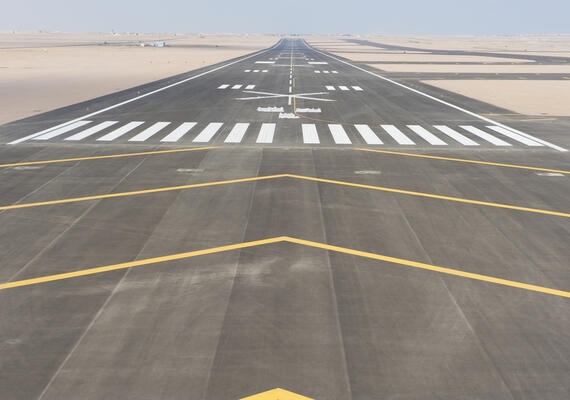
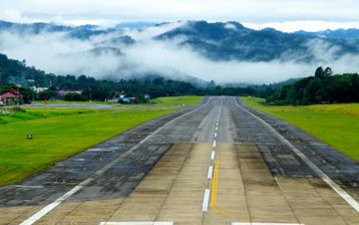
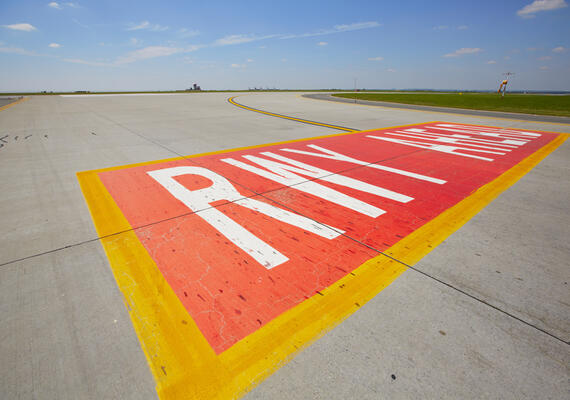
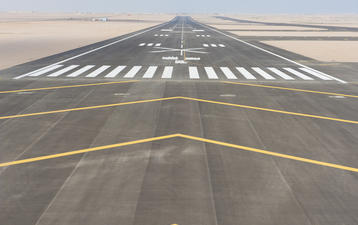
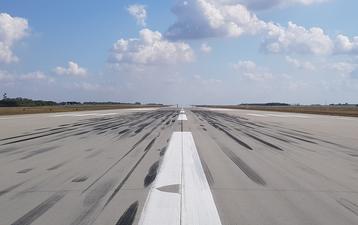
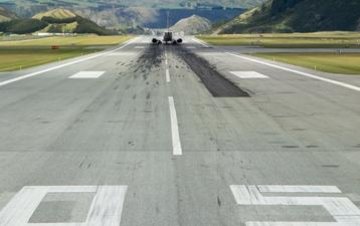
Modern runways are one of the most complex and expensive airport elements. Their planning requires careful consideration of the operating environment and applicable requirements in order to ensure safety of aircraft operations as well as maximise airport capacity.
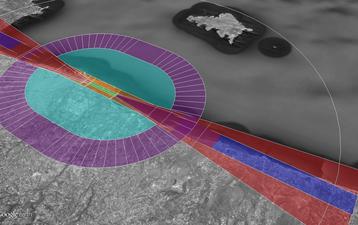
airsight offers detailed planning services that cover the geometric design, positioning, dimensioning and configuration of runway systems (new runways, extensions or displaced thresholds), including runway shoulders, strips, holding positions, runway end safety areas, obstacle limitation requirements, markings and signs as well as associated equipment (e.g. AGL, NavAids etc.).
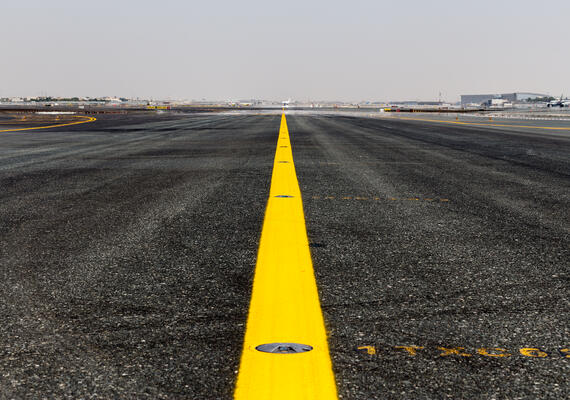
airsight's wide ranging services include geometric design, dimensioning and configuration of airfield layouts including taxiway and taxilane network, taxiway fillets, shoulders and strips, rapid exit taxiways, holding bays and bypasses as well as taxi guidance components such as markings, signs and lights to ensure continuous flows and operations at the highest levels of safety and efficiency.
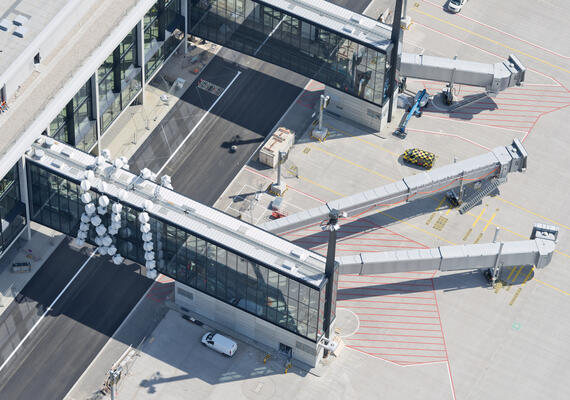
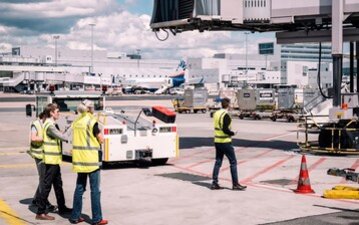
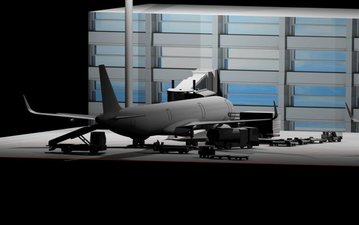
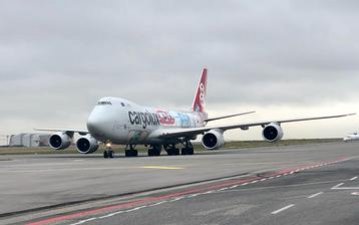
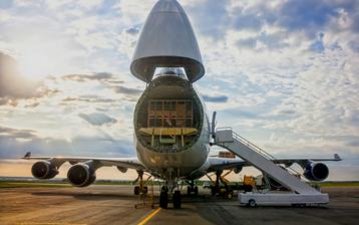
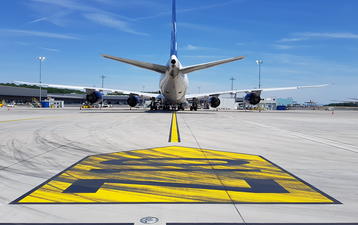
Careful planning, design and optimisation of apron areas is vital to ensure adequacy of aircraft stand provision and sufficiency of aircraft ground movement circulation.
In addition to regulatory requirements, this includes consideration of necessary apron capacity and flexibility, the respective aircraft fleet mix and associated ground manoeuvring procedures as well as numerous ground handling process taking place around the parked aircraft. With regard to ground servicing vehicles an appropriate apron road system should be provided to cater for separation of traffics and, hence, increase apron safety.
Furthermore, airsight assists in planning and optimization of apron floodlighting to ensure compliance with relevant provisions and norms.
Strategic Planning Services
airsight offers a diverse range of airport planning services lending support with strategic design decisions or detailed planning questions.
airsight provides technical engineering, planning and legal expertise that supports complex airport development projects.
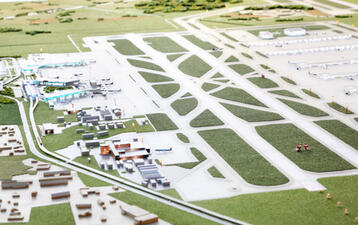
This inludes the preparation of technically sound master plans for airport infrastructure enhancements based on a careful balance between safety objectives and operational effectiveness and taking into consideration infrastructure, operating or phasing alternatives to meet traffic demand.
Strategic planning is linked to an airport’s business plan and defines a set of agreed principles on how future development will be brought forward. Technical reviews validate regulatory compliance, capacity and service levels as well as phasing and capital expenditure programmes of planned infrastructure developments.

Technical Planning Services
airsight offers an interdisciplinary approach to airport planning and conducts detailed technical studies and a wide range of specialised engineering services for aerodrome operators.
Aerodrome Pavement Inspection and Management
Aerodrome pavements must be designed and maintained to withstand the dynamic and static loads generated by aircraft during takeoff, landing, taxiing, and while parked at stands. To ensure that pavements remain safe, functional, and cost-effective over time, regular assessments and timely maintenance are essential.
airsight helps airport authorities to proactively manage their pavement assets, identifying potential issues before they become critical and ensuring that corrective actions are taken in a timely manner. Our team works closely with airport staff to tailor maintenance strategies that improve both short-term safety and long-term pavement performance, optimizing the lifecycle of the infrastructure. Whether it's conducting detailed condition surveys, reviewing pavement maintenance programs, or recommending improvements based on best practices, airsight is committed to supporting the continuous operational efficiency and safety of aerodrome pavements. A recent example of our work includes the independent review of a Pavement Management Programme at a major European airport, where we analyzed pavement condition data, evaluated maintenance practices, and provided actionable recommendations for enhancing the program's effectiveness. For more information, please refer to our detailed case study on the Independent Review of a Pavement Management Programme.
Supporting Infrastructure, Systems & Equipment
An aerodrome consists of complex and interrelated elements. airsight excels in the conceptual planning of these elements, and is one of airport operator's first advisor in this field, and has demonstrated experience in the planning of e.g.:
- De-icing pads
- Underground fuelling facilities
- Air Traffic Control or Apron Towers (incl. remote towers)
- Airport Rescue and Firefighting Services stations
- Passenger Boarding Bridges (PBB)
- Visual Docking Guidance Systems (VDGS)
- Communication, Navigation & Surveillance equipment (CNS)
- Airfield Ground Lighting (AGL)
- Apron Floodlighting
- Jet Blast Fences
New Technologies
Innovative systems can greatly improve the efficiency and safety of airport operations. airsight assits clients in selecting the most promising technology and prioritising investment, assessing the feasibility as well as developing operational implementation concepts. Selected references include:
- Airport Collaborative Decision Making (A-CDM)
- A-SMGCS / Follow-the-Greens
- Remote Apron Control
- Runway anti-skid / special coating
- FOD Detection Systems
- Drone monitoring and prevention systems
Update of Infrastructure for Sustainable Solutions
The introduction of electric ground support equipment (eGSE) brings significant operational and environmental benefits, but its successful deployment requires careful planning and targeted adaptations to the airport’s infrastructure.
airsight supports airports throughout this transition by analysing existing operational processes, assessing technical feasibility, and identifying the infrastructure upgrades required to enable efficient eGSE operations. This includes evaluating power supply capacities, charging logistics, equipment utilisation patterns, and airside traffic flows to ensure that electrified GSE can operate seamlessly within the airport environment. Our experts develop tailored implementation concepts that consider both immediate requirements and long-term scalability, ensuring that investments are future-proof and aligned with the airport’s sustainability goals.
We help define optimal charging locations, integrate charging solutions into existing airside layouts, evaluate the impact on stand operations, and support stakeholder coordination between airport operators, service providers, and energy suppliers. By combining operational expertise with regulatory and planning know-how, airsight ensures that the transition to eGSE is both efficient and compliant with relevant safety and performance requirements. Our goal is to empower airports to reduce emissions, lower operating costs, and improve operational resilience—through a structured and practical implementation approach.
Selected Clients
Do you have a project that you'd like to discuss with us?
Send us a message, we will review your request and get back to you!
How we work

Detailed knowledge of national and international regulations through many years of experiences in aviation projects, consulting and teaching activities

Dedicated and highly qualified team of experts with extensive references on safety assessments, flight operations/procedures as well as obstacle assessments

Worldwide experience in dealing with National Aviation Authorities (incl. military) as well as projects involving stakeholders with diverging interests.

ISO9001:2015 certified Quality Management System to ensure maximum client satisfaction and efficient standardised work processes.