

Overview
Trusted by regulators, aerodromes, operators, and project planners worldwide, we help address today’s most demanding airport and aviation safety challenges.
Our work combines deep regulatory insight, advanced analytical capabilities and practical experience to deliver clear documentation, actionable mitigations and reliable decision support tailored to your context.
From infrastructure changes to operational innovations, every decision carries implications. Whether you are planning a specific change with impact on safety of aerodrome operations, establishing construction site within an active airfield, addressing non-compliances, or mitigating emerging risks, we deliver the insight you need to move forward safely and confidently.
Explore how our approach turns complexity into solutions that keep operations safe, efficient, and resilient.
What kind of safety challenge are you looking to address?






How can we support you in navigating your safety challenge?
If you want to contact us but are unsure which option applies to your situation, please reach out and we will support you all the way. If you prefer to review all our service areas first, simply continue scrolling for a full overview of our capabilities.
Safety Assessments and Aeronautical Studies
Safety assessments provide a process to identify hazards, evaluate risks, and define mitigation measures.

When are Safety Assessments Conducted?
Safety Assessments are required by ICAO and EASA to ensure that safety‑relevant changes and conditions are properly evaluated. Examples of typical use cases are provided below.
They support informed decision‑making and the use of regulatory flexibility tools such as AltMoC, ELoS and Special Conditions.
Why Safety Assessments Matter?
Safety assessments deliver clear benefits:
- Protect lives and assets by identifying hazards before they lead to incidents.
- Enable safe implementation of change, whether introducing new procedures, infrastructure, or technologies.
- Provide evidence-based assurance for regulators, stakeholders, and management.
- Support operational continuity during complex projects or temporary works.
- Build resilience by anticipating future risks and integrating safety into long-term planning.
- Go beyond compliance by applying risk‑based judgement where standards alone do not fully capture operational safety.
How airsight Brings Value
Regulatory Expertise

ICAO, EASA and industry best practice know‑how
Quantitative Risk Analysis
Measurable insights for confident decisions

Visualization & Simulation
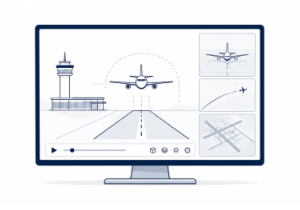
Understanding operational impact before implementation
Stakeholder Engagement
Alignment across airport, ATC, handlers, regulators

Our Expertise
With hundreds of successful safety assessment projects, we support clients in managing change, resolving deviations and addressing emerging safety issues. Below you can explore common scenarios where a Safety Assessment is needed and the value we bring to the process.
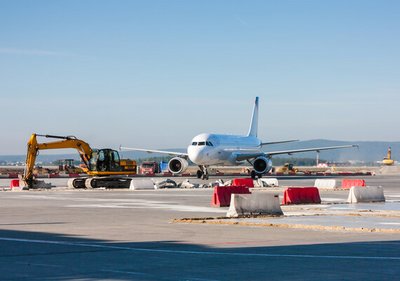
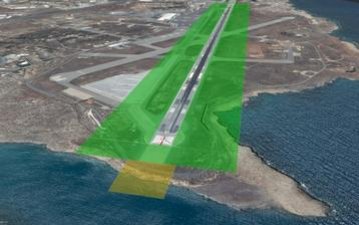
Works within active airfields (e.g. works in the runway strip, works requiring temporary displaced runway thresholds, works within live aprons) introduce complex safety challenges that demand careful planning, risk management, and an integrated consideration of design and operations.
Because these challenges often go beyond the standard application of ICAO or EASA specifications, we review case‑specific impacts such as flight procedures, OLS, taxi routing, jet blast, temporary markings and lighting, etc. to ensure a safe execution plan.
Supported by experience, data, and proven methodologies that airsight brings to every project, you receive a robust safety assessment with practical mitigations and documentation that supports safe execution and regulatory acceptance. You receive a safety assessment with targeted mitigations that supports safe execution and regulatory acceptance.

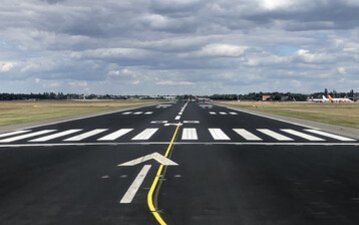
Permanent changes such as runway extensions, threshold displacements, new taxiways, or new operational procedures carry safety implications that require early evaluation. Under ICAO and EASA, a Safety Assessment is required before any change with impact on safety of aerodrome operations is implemented.
To avoid embedded risks, operational disruptions and costly late‑stage modifications, we review the specific implications of the change across your airport’s infrastructure, procedures, staff and systems through a structured safety assessment process.
Drawing on extensive experience and a strong regulatory foundation, we deliver a comprehensive Safety Assessment with clear risk-based measures and regulator ready documentation that sets you up for successful change management and seamless integration into the existing system.
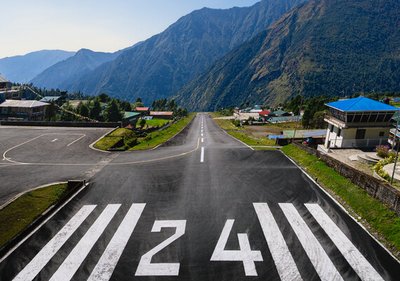
Non-compliant situations such as non-standard runway strip slopes, missing AGL or reduced ALS lengths can affect safety margins and impact day-to-day operations. These deviations often arise from site-specific conditions and, at times, from regulatory unclarities or inconsistencies.
When non‑compliance occurs, timely action is essential. airsight conducts a structured safety assessment to determine whether operations can remain safe under these conditions, supported by stakeholder engagement to ensure alignment on mitigations.
The outcome is robust documentation that provides evidence‑based assurance for accountable managers, regulators and stakeholders, support the use of flexibility tools to restore compliance, and helps maintain operational continuity and safety margins through tailored measures.
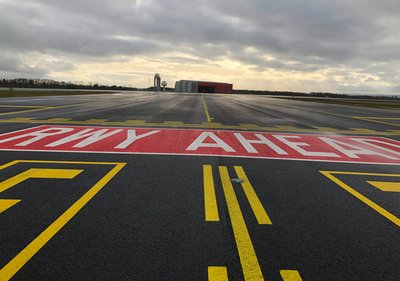
When Safety performance monitoring and the measurement of Safety Performance Indicators (SPIs) reveals negative trends or high‑risk occurrences such as runway and taxiway incursions, or increasing operational complexity, a targeted Safety Assessment may be required as a reactive risk management measure.
airsight analyses contributing factors, evaluates risk exposure and develops mitigation strategies to restore safety margins. Where beneficial, we apply simulations or quantitative models to provide clearer insight into operational vulnerabilities and to identify the most effective mitigation opportunities.
Through structured analysis and engagement with operational stakeholders, we deliver focused recommendations that address root causes, strengthen resilience and reduce the likelihood of incidents.
Feasibility Studies
Safety at the core of decision‑making, integrated with operations, compliance, cost, and implementation.
When are Feasibility Studies conducted?
When planning complex airport projects, safety is the key parameter in decision-making. But it is one part of the equation.
Major development programs raise many critical questions:
- Is the concept technically and operationally viable?
- If viable, how will different options affect safety, operational efficiency, commercial viability, and regulatory compliance?
- Which option offers the best balance of benefits and constraints?
Why Feasibility Studies matter?
Feasibility studies provide objective and data-driven insights that simplify complexity and support decision making.
At airsight, we actively incorporate local regulations, site-specific conditions, and stakeholder input to deliver tailored recommendations that are practical, flexible, and future-ready.
How airsight Brings Value
Understanding your context
Clarifying site conditions, objectives, constraints and evaluation criteria
Developing solutions
Refining a single concept or creating multiple viable options
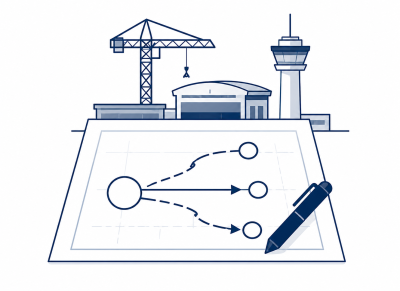
Evaluating impacts
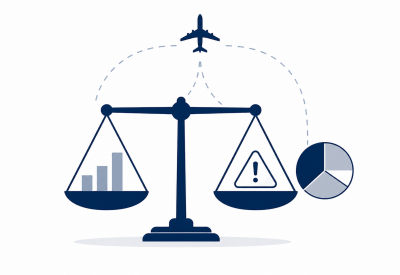
Comparison using traceable multi‑criteria analysis and safety modelling
Supporting decisions
Providing clear, actionable recommendations for safe implementation

Our Expertise
With proven knowledge, extensive expertise and advanced technical capabilities, airsight delivers feasibility studies that go beyond safety yet integrate safety into every step, creating a structured roadmap that enables stakeholders to move forward with confidence. Below you can explore how we have guided airports through complex decisions such as runway extensions, apron redesigns and remote tower implementations.
Construction of Runway / Taxiway / Apron
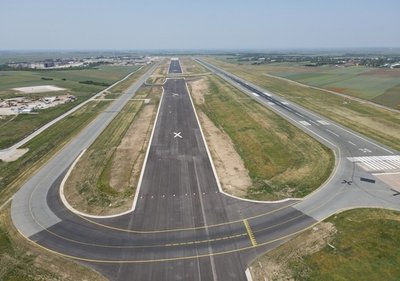
Expanding movement areas is a complex decision that impacts safety, capacity, and compliance. airsight supports airports in evaluating the technical, operational, and regulatory feasibility of such projects and in developing clear, actionable concepts.
We analyse site constraints and operational compatibility. Depending on project needs, our studies may include runway performance analysis, obstacle and flight procedure assessments, risk modelling and simulations. Implementation aspects, cost‑benefit considerations and environmental or social factors can also be addressed.
The outcome is a comprehensive feasibility report that enables airports to make informed decisions and plan safe, efficient, and future-ready infrastructure.
Construction Works Near Active Runway
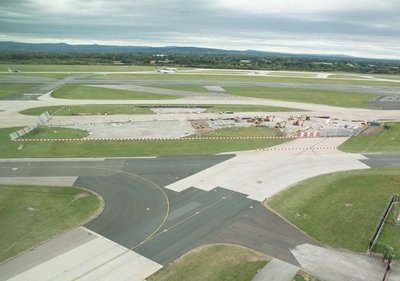
Executing construction works near active runways (e.g. within the runway strip) presents significant safety and operational challenges that require careful planning. airsight evaluates the technical, operational and regulatory feasibility of such projects.
Depending on project needs, our studies may include OLS reviews, flight procedure assessments, runway performance analysis, and jet blast effect simulations. We also conduct risk identification workshops and develop quantitative risk models to safeguard safety margins under modified conditions.
The outcome is a set of analysis‑driven findings that define safe construction phasing, operational restrictions and infrastructure adaptations, enabling evidence‑based decisions on the safest and most practical execution strategy.
Introduction of New Operation Types

Introducing a change in operations, such as accommodating larger aircraft types or enabling CAT II/III low‑visibility procedures, requires confirming that the existing aerodrome system, currently not compliant for such operations, can safely support the new operational profile.
airsight evaluates the feasibility of changes through infrastructure checks and operational assessments. Depending on the project, our studies may cover runway performance analysis, clearance simulations, jet blast impacts and compatibility reviews for flight procedures. Regulatory requirements and future traffic are also considered to ensure compliance and continuity.
The outcome is a structured study that clarifies impacts and provides a decision‑making framework with guidance on required infrastructure upgrades or operational and procedural adjustments.
Remote & Virtual Tower Solutions
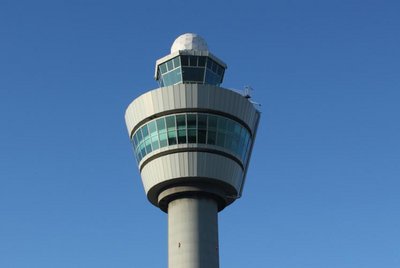
Replacing or upgrading an airport tower with a remote or virtual solution is a complex decision.
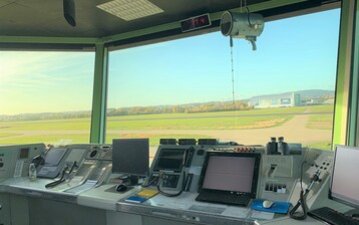
airsight supports this process by evaluating technical and operational feasibility, identifying regulatory requirements, and comparing solution variants such as conventional, virtual, or remote towers. Our studies assess pros and cons, define tender requirements, and provide guidance for implementation planning, ensuring airports can make informed, vendor-neutral decisions.
The outcome is a structured roadmap that enables airports to implement innovative tower solutions safely, efficiently, and in full compliance with international standards.
Introduction of Apron Management Services
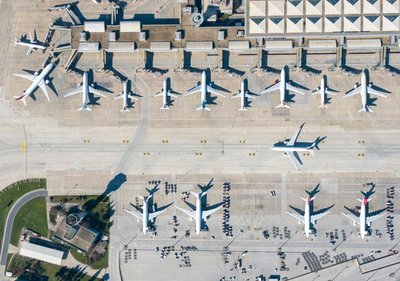
Apron Management Services (AMS) as drivers of efficient apron operations are critical for safety and capacity at busy airports. airsight helps airports assess the feasibility of introducing or adapting Apron Management Services and develop tailored implementation concepts.
Our studies cover technical equipment and system requirements, operational procedures, and delineation of responsibilities, supported by cost-benefit analysis and guidance on staffing levels and training programs. We also provide Management of Change support and conduct stakeholder workshops to ensure smooth transition and regulatory approval.
The outcome is a clear implementation strategy that improves coordination, enhances safety, and prepares airports for future operational frameworks.
Advanced Safety Studies & Modelling
Driving risk-based safety management through advanced studies and quantitative models.
When are Advanced Safety Studies & Modelling applied?
Most airport safety challenges can be addressed through established compliance processes, qualitative assessments and expert judgement. In some cases, however, the complexity of the challenge requires a deeper understanding of operational risks. Advanced studies, modelling and quantitative analyses provide the objective evidence needed to support robust, risk-based decision-making.
Why Advanced Safety Studies & Modelling matter?
Advanced studies and modelling provide objective and data-driven evidence to support sound decisions to ensure safe, efficient, and resilient airport operations.
How airsight Brings Value
Advanced Solutions
Software and models that provide objective insight
Empirical Data
Real‑world datasets and quantitative methodologies for risk‑based evaluations

Industry know-how

Extensive experience with complex operational and safety problems at airports
Operational relevance
Operational perspective ensuring practical, implementable decisions
Our Expertise
By combining advanced modelling, empirical data and international best practices, we help airports understand complex safety questions with clarity and precision. Below you can discover examples of how our advanced studies and modelling capabilities have supported airports worldwide.
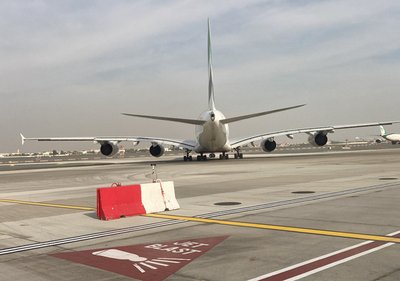
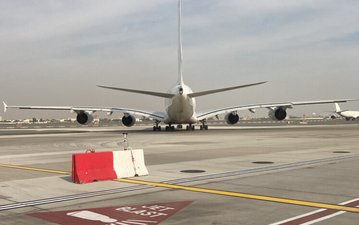
Jet blast can pose serious risks to infrastructure, equipment and people, and may limit apron or taxiway use depending on local conditions. Every airport is affected differently based on layout, operational scenarios, aircraft mix, taxi thrust settings, making reliable analysis essential to understand exposure and identify effective mitigation options.
In addition to the commonly used simulations based on manufacturer data, airsight has the capabilities to evaluate jet blast effects using real‑world measurements, full-flight simulator trials, and consolidated technical research. This ensures accurate jet blast contours and reliable results.
The outcome is a clear, evidence‑based assessment that supports safe and compliant design, minimizes operational restrictions and supports efficient use of space.
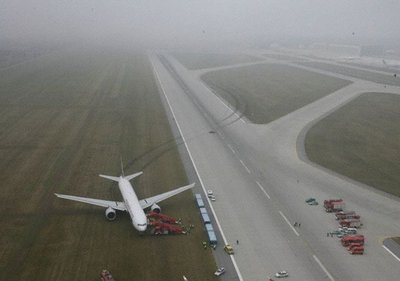
Runway excursions - veer‑offs, overruns and undershoots - pose significant safety and planning challenges for airports. Understanding these risks is essential for designing safe runway environments.
airsight applies a quantitative risk model that combines:
- Accident Rate Analysis – Based on decades of global empirical data and official reports.
- Conditional Probability Modelling – Applying advanced statistical methods, including Extreme Value Theory, to predict rare events.
Separate modelling of longitudinal and lateral deviations precisely evaluates exposure under your airport’s operational conditions.
The outcome is an evidence‑based basis for safe and efficient infrastructure planning, enabling optimized land use, regulatory compliance and confident, data‑driven decisions supported by internationally recognized methods.
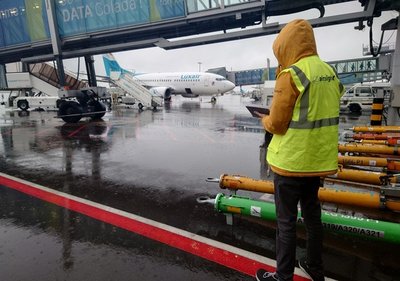
Airports have the potential to generate, collect and utilise large amounts of operational and safety-related data, yet much of its potential remains untapped. Combining existing information with targeted data collection activities can support deeper operational understanding and more informed safety decisions.
One example of such targeted data collection is the Line Operations Safety Audit (LOSA). Originally developed for flight operations, the LOSA methodology can be applied across a wide range of airport activities. By observing real-world behaviour across ground handling, ATC coordination and airside vehicle movements, LOSA helps identify human-factor issues, procedural gaps and latent threats before they lead to incidents.
Using trained observers and Threat and Error Management (TEM) principles, LOSA captures confidential, non-punitive insights that reflect actual operational practices. The findings support operational resilience, reduce human error and strengthen compliance with ICAO and EASA safety expectations. The outcome is a targeted set of improvements that supports training, process optimisation and continuous SMS enhancement.
Combined with other operational, safety and performance data, LOSA can contribute valuable input to a more proactive and evidence-based approach to safety management, aligned with the principles of Safety Intelligence promoted by ICAO Annex 19 and Doc 10159 – Safety Intelligence (SI) Manual.
Structures near runways, such as hangars, towers or support facilities, can generate unexpected turbulence that affects aircraft during approach and landing. Even when OLS and runway strip requirements are met, aerodynamic effects can still occur as airports expand and development moves closer to operational areas.
To address this, wind‑turbulence assessments should be conducted early in the planning process. Using a cost‑efficient Computational Fluid Dynamics (CFD) based tool, we analyse turbulence and wind‑deficit risks under varying wind and terrain conditions, providing reliable insight without the need for expensive wind‑tunnel testing or highly complex simulations.
The outcome is an evidence‑based assessment that helps, ensure compliance with international guidelines, prevent late‑stage design changes and reduce the risk of wind shear or turbulence during final approach and landing.

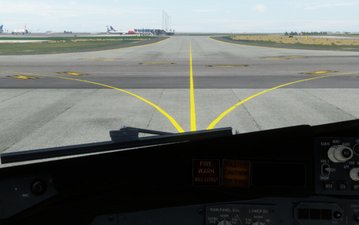
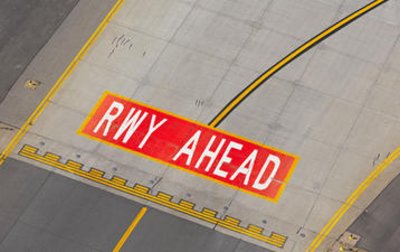
Airfield ground navigation aids and movement area naming schemes are essential for safe and intuitive ground movement. Inconsistent or complex layouts, unclear visual aids or outdated naming conventions can create confusion and increase operational risk, particularly in low-visibility conditions.
We combine compliance checks with advanced modelling and 3D cockpit-perspective simulations to assess topics such as:
- Stands and taxiway designation logic.
- Visibility and usability of visual aids.
- Impact of non-compliant visual aids (e.g. reduced ALS).
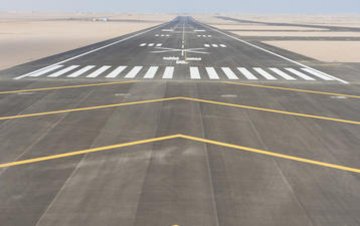
- Temporary arrangements like displaced thresholds.
The outcome is a clear improvement plan supported by simulation evidence, ensuring compliance and enhancing the clarity, intuitiveness and safety of ground navigation.
Get in Touch
Ready to enhance your aerodrome's safety management? Contact us today to learn more about our services and how we can support your goal.