Root Cause Analysis for Aerodrome Operations
From Findings to Effective Corrective Actions

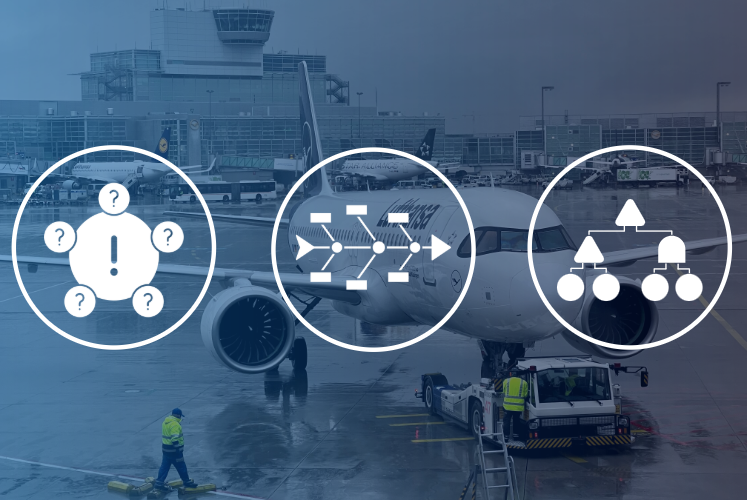
In aerodrome operations, problems rarely appear suddenly. Long before an incident, disruption or non compliance becomes visible, organisations encounter early signals - audit findings, observations, recurring deviations, or reports of safety relevant occurrences. When these signals are examined through effective Root Cause Analysis, they reveal deeper weaknesses in procedures, resources or operational interfaces. Whether used proactively in audits or reactively in occurrence investigations, this insight enables organisations to take meaningful action before underlying issues contribute to more serious safety events.
Root Cause Analysis (RCA) is a fundamental requirement across the aviation regulatory framework, supporting both compliance monitoring and safety management systems (SMS). Regulations such as (EU) No 139/2014 and (EU) No 376/2014 require organisations to identify root causes, analyse occurrences and implement effective corrective actions. This approach is consistently reflected across ATM/ANS, ground handling, information security, ICAO Annex 19 and ACI guidance.
In practice, Root Cause Analysis is applied across the full operational spectrum - from proactive compliance monitoring, auditing and regulatory oversight to occurrence analysis, event assessment and safety investigation. This two-day aviation Root Cause Analysis course is designed to reflect this reality, equipping participants with the knowledge and practical skills required to apply RCA across both compliance and safety contexts.
Participants will develop practical Root Cause Analysis skills to analyse safety events and operational occurrences, strengthening the analytical and investigative thinking required to understand how and why issues develop within complex aviation systems. The course also focuses on the application of RCA in compliance monitoring and audit contexts, supporting the analysis of findings, non-compliances and operational deviations. Participants learn to identify operational, technical, organisational and human contributors, recognise systemic conditions, and ensure that corrective actions address the true causes rather than simply closing the finding. By combining investigative thinking with compliance-driven analysis, the course equips participants to apply RCA consistently across both safety and operational contexts, improving decision-making, strengthening organisational performance and preventing recurrence.
Prerequisites
A basic understanding of several of the following areas is recommended: aviation operations, compliance monitoring, safety management systems (SMS), occurrence reporting or investigation processes, information security principles, or ground handling operations. Prior experience in auditing, safety analysis or investigation activities will be beneficial but is not required.
 Training 5 or more people? Ask for an In-house course at your premises or online!
Course Details
Location:BerlinLanguage:English
Date:07.12. - 08.12.2026
Duration:2 days
Provider:airsight GmbH
Course Fee
For courses in Berlin:
All customers will be charged 19% VAT. For more information please see our About Taxes page.
The final price will be shown on your invoice.
Please note: If you want to register several particpants from your company but need a single invoice for each, please register each of them seperately.
Online registration is intended for companies, public authorities and other organisations. If you would like to attend as a private individual, please contact us at training@airsight.de.
Course Content
Compliance findings as early indicators of system weaknesses
- Role of compliance monitoring in identifying weaknesses in aerodrome operations
- Audit findings, observations, and deviations as early indicators of operational risk
- Using compliance monitoring activities to proactively support safety management
Understanding findings and operational safety signals
- Observations, findings, non-conformities and operational deviations and safety occurrences
- From findings and events to causes: Symptoms, contributing factors and root causes
- Linear versus systemic thinking in analysing operational issues
- Active failures and latent conditions within operational systems
- Using occurrence data and operational information to identify patterns and systemic weaknesses
Analysing causes in aerodrome operations
- Apply basic RCA principles in daily operations, recognizing systemic and organizational factors,
- Understanding cause-effect relationships in aerodrome operational systems
- Identifying operational, technical, organisational and human contributors across airside activities
- Recognising weaknesses in procedures, interfaces, resources and safety barriers
- Differentiating between immediate causes, contributing factors and root causes
Root Cause Analysis methods
- Principles and practical application of common RCA tools in aviation operational contexts
- Five Whys, Cause & Effect (Fishbone) diagrams and Fault Tree Analysis
- Selecting appropriate methods depending on the complexity of operational issues
Developing effective corrective actions
- Linking root causes to corrective and preventive actions
- Avoiding superficial responses such as retraining or reminders
- Prioritising actions based on operational risk and impact
RCA in compliance, safety and operational contexts
- Applying RCA to audit findings, non-conformities and Corrective Action Plans (CAPs)
- Supporting occurrence analysis and safety reviews through structured causal thinking
- Contributing to safety investigations through effective identification of contributing factors
- Demonstrating sound causal analysis during oversight and regulatory interactions
Integration into compliance and safety management processes
- Using RCA outcomes to support operational improvement and organisational learning
- Monitoring the effectiveness of corrective actions
- Preventing recurrence through systemic improvements
Practical application
- Aerodrome-specific scenarios and operational case studies
- Guided Root Cause Analysis exercises
- Application of RCA in audit, operational and event-based scenarios
- Provide accurate and timely operational information to support RCA during safety investigations
Trainer
Deppy Pantazi
Deppy Pantazi is a highly experienced aviation professional with over 10 years in the sector, specialising in EASA compliance for aerodromes across organisational, operational, and infrastructural domains. Her expertise combines regulatory knowledge with a strong understanding of human factors, auditor behaviour, and investigative communication, enabling training that is technically robust and grounded in operational reality.
She is qualified as a Training Instructor by the International Civil Aviation Organization (ICAO) and holds ISO 9001:2015 Lead Auditor certification. Since 2022, she has worked as a Training Instructor for airsight, delivering safety, compliance, auditing, and management-system training to aviation professionals across Europe, with a strong emphasis on audit methodology, structured interviewing, and evidence-based assessment informed by criminal-investigation and investigative-interviewing models.
Her professional development includes specialised training in Safety Management Systems (SMS) for airports, EU aviation regulatory frameworks, compliance audit management, and change management at aerodromes. Academically, she holds a Bachelor’s degree in Sociology (specialisation in Criminology), two Master’s degrees in Criminal Investigation and Person-Centered Psychotherapy, and Postgraduate Diplomas in Security Management and Psychology; she is currently completing a Bachelor’s degree in Forensic Psychology.
Target Group
- Safety managers, safety officers and safety investigators
- Compliance monitoring, quality and audit professionals (managers and auditors)
- Aerodrome operational managers (airside operations, apron management, maintenance, ground handling)
- Ground handling professionals involved in operational activities, safety management and occurrence reporting
- Personnel responsible for developing and implementing corrective action plans (CAPs)
- Auditees responding to internal or regulatory audit findings
- Individuals involved in occurrence reporting, safety analysis or investigation within the SMS
- Information security and risk management professionals
- Representatives of aviation authorities involved in oversight and evaluation corrective actions
Course Location
Participants are responsible for making their own travel arrangements. The accommodation and travel costs are at the charge of the participants. Please note that airsight does not perform any travel and hotel bookings for the participants. Rooms can however be booked directly by the participants by contacting the hotel. We would like to point out that from January 2025 a City Tax of 7.5% will be imposed on overnight stays for business and professional purposes in Berlin.
The course fee includes the registration, training material and examination. For non-virtual courses, coffee breaks and business lunch are also included.
Organisational Details
The course hours are scheduled as follows:
first training day: 10:00 am - 5:00 pm
last training day: 8:00 am - 4:00 pm
Coffee breaks and business lunch are included in the course fee. At the end of the course, all participants will receive an airsight certificate based on EASA training regulations, which is highly recognised throughout the aviation industry.
About airsight Training

airsight Training course quality
airsight operates an ISO 9001 certified Quality Management System and pursues the objective to provide high quality services that fully meet the clients’ needs.
Course Details
Location:BerlinLanguage:English
Date:07.12. - 08.12.2027
Duration:2 days
Provider:airsight GmbH
Course Fee
For courses in Berlin:
All customers will be charged 19% VAT. For more information please see our About Taxes page.
The final price will be shown on your invoice.
Please note: If you want to register several particpants from your company but need a single invoice for each, please register each of them seperately.
Online registration is intended for companies, public authorities and other organisations. If you would like to attend as a private individual, please contact us at training@airsight.de.
Course Content
Compliance findings as early indicators of system weaknesses
- Role of compliance monitoring in identifying weaknesses in aerodrome operations
- Audit findings, observations, and deviations as early indicators of operational risk
- Using compliance monitoring activities to proactively support safety management
Understanding findings and operational safety signals
- Observations, findings, non-conformities and operational deviations and safety occurrences
- From findings and events to causes: Symptoms, contributing factors and root causes
- Linear versus systemic thinking in analysing operational issues
- Active failures and latent conditions within operational systems
- Using occurrence data and operational information to identify patterns and systemic weaknesses
Analysing causes in aerodrome operations
- Apply basic RCA principles in daily operations, recognizing systemic and organizational factors,
- Understanding cause-effect relationships in aerodrome operational systems
- Identifying operational, technical, organisational and human contributors across airside activities
- Recognising weaknesses in procedures, interfaces, resources and safety barriers
- Differentiating between immediate causes, contributing factors and root causes
Root Cause Analysis methods
- Principles and practical application of common RCA tools in aviation operational contexts
- Five Whys, Cause & Effect (Fishbone) diagrams and Fault Tree Analysis
- Selecting appropriate methods depending on the complexity of operational issues
Developing effective corrective actions
- Linking root causes to corrective and preventive actions
- Avoiding superficial responses such as retraining or reminders
- Prioritising actions based on operational risk and impact
RCA in compliance, safety and operational contexts
- Applying RCA to audit findings, non-conformities and Corrective Action Plans (CAPs)
- Supporting occurrence analysis and safety reviews through structured causal thinking
- Contributing to safety investigations through effective identification of contributing factors
- Demonstrating sound causal analysis during oversight and regulatory interactions
Integration into compliance and safety management processes
- Using RCA outcomes to support operational improvement and organisational learning
- Monitoring the effectiveness of corrective actions
- Preventing recurrence through systemic improvements
Practical application
- Aerodrome-specific scenarios and operational case studies
- Guided Root Cause Analysis exercises
- Application of RCA in audit, operational and event-based scenarios
- Provide accurate and timely operational information to support RCA during safety investigations
Trainer
Deppy Pantazi
Deppy Pantazi is a highly experienced aviation professional with over 10 years in the sector, specialising in EASA compliance for aerodromes across organisational, operational, and infrastructural domains. Her expertise combines regulatory knowledge with a strong understanding of human factors, auditor behaviour, and investigative communication, enabling training that is technically robust and grounded in operational reality.
She is qualified as a Training Instructor by the International Civil Aviation Organization (ICAO) and holds ISO 9001:2015 Lead Auditor certification. Since 2022, she has worked as a Training Instructor for airsight, delivering safety, compliance, auditing, and management-system training to aviation professionals across Europe, with a strong emphasis on audit methodology, structured interviewing, and evidence-based assessment informed by criminal-investigation and investigative-interviewing models.
Her professional development includes specialised training in Safety Management Systems (SMS) for airports, EU aviation regulatory frameworks, compliance audit management, and change management at aerodromes. Academically, she holds a Bachelor’s degree in Sociology (specialisation in Criminology), two Master’s degrees in Criminal Investigation and Person-Centered Psychotherapy, and Postgraduate Diplomas in Security Management and Psychology; she is currently completing a Bachelor’s degree in Forensic Psychology.
Target Group
- Safety managers, safety officers and safety investigators
- Compliance monitoring, quality and audit professionals (managers and auditors)
- Aerodrome operational managers (airside operations, apron management, maintenance, ground handling)
- Ground handling professionals involved in operational activities, safety management and occurrence reporting
- Personnel responsible for developing and implementing corrective action plans (CAPs)
- Auditees responding to internal or regulatory audit findings
- Individuals involved in occurrence reporting, safety analysis or investigation within the SMS
- Information security and risk management professionals
- Representatives of aviation authorities involved in oversight and evaluation corrective actions
Course Location
Participants are responsible for making their own travel arrangements. The accommodation and travel costs are at the charge of the participants. Please note that airsight does not perform any travel and hotel bookings for the participants. Rooms can however be booked directly by the participants by contacting the hotel. We would like to point out that from January 2025 a City Tax of 7.5% will be imposed on overnight stays for business and professional purposes in Berlin.
The course fee includes the registration, training material and examination. For non-virtual courses, coffee breaks and business lunch are also included.
Organisational Details
The course hours are scheduled as follows:
first training day: 10:00 am - 5:00 pm
last training day: 8:00 am - 4:00 pm
Coffee breaks and business lunch are included in the course fee. At the end of the course, all participants will receive an airsight certificate based on EASA training regulations, which is highly recognised throughout the aviation industry.
About airsight Training
airsight Training course quality
airsight operates an ISO 9001 certified Quality Management System and pursues the objective to provide high quality services that fully meet the clients’ needs.
Course Details
Location:In-houseLanguage:English
Duration:2 days
Provider:airsight GmbH
Course Content
Compliance findings as early indicators of system weaknesses
- Role of compliance monitoring in identifying weaknesses in aerodrome operations
- Audit findings, observations, and deviations as early indicators of operational risk
- Using compliance monitoring activities to proactively support safety management
Understanding findings and operational safety signals
- Observations, findings, non-conformities and operational deviations and safety occurrences
- From findings and events to causes: Symptoms, contributing factors and root causes
- Linear versus systemic thinking in analysing operational issues
- Active failures and latent conditions within operational systems
- Using occurrence data and operational information to identify patterns and systemic weaknesses
Analysing causes in aerodrome operations
- Apply basic RCA principles in daily operations, recognizing systemic and organizational factors,
- Understanding cause-effect relationships in aerodrome operational systems
- Identifying operational, technical, organisational and human contributors across airside activities
- Recognising weaknesses in procedures, interfaces, resources and safety barriers
- Differentiating between immediate causes, contributing factors and root causes
Root Cause Analysis methods
- Principles and practical application of common RCA tools in aviation operational contexts
- Five Whys, Cause & Effect (Fishbone) diagrams and Fault Tree Analysis
- Selecting appropriate methods depending on the complexity of operational issues
Developing effective corrective actions
- Linking root causes to corrective and preventive actions
- Avoiding superficial responses such as retraining or reminders
- Prioritising actions based on operational risk and impact
RCA in compliance, safety and operational contexts
- Applying RCA to audit findings, non-conformities and Corrective Action Plans (CAPs)
- Supporting occurrence analysis and safety reviews through structured causal thinking
- Contributing to safety investigations through effective identification of contributing factors
- Demonstrating sound causal analysis during oversight and regulatory interactions
Integration into compliance and safety management processes
- Using RCA outcomes to support operational improvement and organisational learning
- Monitoring the effectiveness of corrective actions
- Preventing recurrence through systemic improvements
Practical application
- Aerodrome-specific scenarios and operational case studies
- Guided Root Cause Analysis exercises
- Application of RCA in audit, operational and event-based scenarios
- Provide accurate and timely operational information to support RCA during safety investigations
Trainer
Deppy Pantazi
Deppy Pantazi is a highly experienced aviation professional with over 10 years in the sector, specialising in EASA compliance for aerodromes across organisational, operational, and infrastructural domains. Her expertise combines regulatory knowledge with a strong understanding of human factors, auditor behaviour, and investigative communication, enabling training that is technically robust and grounded in operational reality.
She is qualified as a Training Instructor by the International Civil Aviation Organization (ICAO) and holds ISO 9001:2015 Lead Auditor certification. Since 2022, she has worked as a Training Instructor for airsight, delivering safety, compliance, auditing, and management-system training to aviation professionals across Europe, with a strong emphasis on audit methodology, structured interviewing, and evidence-based assessment informed by criminal-investigation and investigative-interviewing models.
Her professional development includes specialised training in Safety Management Systems (SMS) for airports, EU aviation regulatory frameworks, compliance audit management, and change management at aerodromes. Academically, she holds a Bachelor’s degree in Sociology (specialisation in Criminology), two Master’s degrees in Criminal Investigation and Person-Centered Psychotherapy, and Postgraduate Diplomas in Security Management and Psychology; she is currently completing a Bachelor’s degree in Forensic Psychology.
Wolfgang Jöres
On the basis of his commercial pilot license and his engineering degree, Wolfgang has been working in aviation for more than 40 years, mainly in leadership positions. After a career as an officer and helicopter pilot in the German Air Force, he took responsibility for the modification of the German Polar research aircraft and operation in the polar regions. After that he was Managing Director, Accountable Manager, and Continuing Airworthiness Manager of a specialized aircraft operation. This company executed flight inspection services for the calibration of landing and navigation facilities in Europe and the Middle East. Since 2014, Wolfgang Jöres is acting as recognized consultant and expert for Onshore and Offshore heliports, and also as authenticated Aerospace Auditor for the EN9100 Quality Management systems.
In his diverse positions Wolfgang acquired an in-depth knowledge of operational, technical, economic, and regulatory aspects in aviation, e.g. modification of aircraft, special mission operations, and airspace infrastructure.
Target Group
- Safety managers, safety officers and safety investigators
- Compliance monitoring, quality and audit professionals (managers and auditors)
- Aerodrome operational managers (airside operations, apron management, maintenance, ground handling)
- Ground handling professionals involved in operational activities, safety management and occurrence reporting
- Personnel responsible for developing and implementing corrective action plans (CAPs)
- Auditees responding to internal or regulatory audit findings
- Individuals involved in occurrence reporting, safety analysis or investigation within the SMS
- Information security and risk management professionals
- Representatives of aviation authorities involved in oversight and evaluation corrective actions
Organisational Details
airsight offers this training course on request, worldwide. At the end of the course, all participants will receive an airsight certificate based on EASA training regulations, which is highly recognised throughout the aviation industry.
About airsight Training
airsight Training course quality
airsight operates an ISO 9001 certified Quality Management System and pursues the objective to provide high quality services that fully meet the clients’ needs.