Aircraft Noise Management at Airports

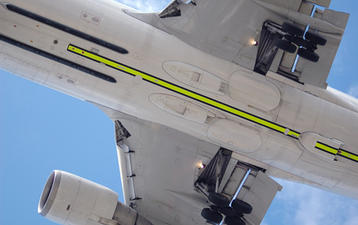
Aircraft noise is one of the most important environmental aspects of aviation worldwide. It represents a key challenge for airport operators, aviation authorities, air navigation service providers, municipalities, local communities and other stakeholders. Noise exposure around airports can strongly influence operational development, infrastructure planning and the public acceptance of aviation. At the same time, expectations regarding transparent assessment methods, effective mitigation measures and proactive stakeholder engagement continue to increase.
The aim of this three-day training course is to provide participants with a comprehensive understanding of the generation, assessment and management of aircraft noise at airports. The course covers the physical fundamentals of acoustics, the effects of aircraft noise on people and the environment, international and European regulatory frameworks, as well as current methods for aircraft noise measurement and monitoring. Building on this foundation, the course introduces technical, operational and planning-related mitigation measures and discusses their practical application. A particular focus is placed on aircraft noise modelling and assessment. Participants will become familiar with major international calculation approaches and gain insight into modern tools for flight track analysis, noise mapping and the preparation of aircraft noise forecasts.
Practical examples are used to examine current challenges in aircraft noise management and to develop solution approaches for different airport types and operating environments. The course combines regulatory, technical, operational and communication perspectives, enabling participants to take a holistic view of aircraft noise management.
This training course is designed for professionals working at airports, aviation authorities, air navigation service providers, flight procedure design organisations, planning and engineering consultancies, environmental authorities, municipalities, consulting firms and other organisations involved in assessing or managing the environmental impacts of aviation. The content is suitable both for participants new to the topic and for experienced practitioners who wish to deepen or refresh their knowledge of aircraft noise management.
 10% Early Bird Discount on all 2027 public courses. Only valid until 31/01/2027!
 Training 5 or more people? Ask for an In-house course at your premises or online!
Course Details
Location:BerlinLanguage:English
Date:22.06. - 24.06.2027
Duration:3 days
Provider:airsight GmbH
Course Fee
For courses in Berlin:
All customers will be charged 19% VAT. For more information please see our About Taxes page.
The final price will be shown on your invoice.
Please note: If you want to register several particpants from your company but need a single invoice for each, please register each of them seperately.
Online registration is intended for companies, public authorities and other organisations. If you would like to attend as a private individual, please contact us at training@airsight.de.
Course Content
Day 1 – Fundamentals of Aircraft Noise
- Introduction to aircraft noise: relevance, current challenges, stakeholder landscape and future traffic development
- Fundamentals of technical acoustics and noise metrics
- Generation and sources of aircraft noise
- Effects of aircraft noise on people, communities and the environment
- Group exercise
Day 2 – Regulatory Frameworks and Mitigation Measures
- International frameworks, including ICAO Annex 16 Volume I and the ICAO Balanced Approach
- European frameworks, including EASA CS-36, the Environmental Noise Directive and other relevant EU requirements
- Aircraft noise certification and its role in airport noise management
- Active mitigation measures, including technical, operational and traffic management approaches
- Aircraft noise considerations in flight procedure design and airspace planning
- Passive mitigation measures, including sound insulation programmes, land-use planning and community protection concepts
- Group exercise on aircraft noise management and stakeholder engagement
Day 3 – Modelling and Assessment
- Fundamentals of aircraft noise modelling and generic modelling approaches
- International calculation methods, including ECAC Doc 29/CNOSSOS-EU
- Input data requirements and data preparation for aircraft noise assessments
- Flight track data analysis, including the use of radar and operational data
- Noise mapping, interpretation and assessment of results
- Software demonstration and case studies/best practices
Trainer
Christoph Struempfel-Seifert, M.Sc.
Head of airsight’s Sustainable Aviation department
Mr Struempfel-Seifert is an expert for sustainable aviation and is responsible for all project tasks related to sustainable aviation and environmental protection at airports. Furthermore, he is an appreciated trainer, sharing his knowledge and practical experience with other national and international aviation experts.
After graduating as Master of Science in Aeronautics and Astronautics from the Technical University of Berlin, he worked as a research assistant and lecturer at the Chair of Flight Guidance and Air Transport at the TU Berlin. In his scientific career, he focused on modelling aircraft noise and emissions, UAS noise measurements and calculation as well as the optimization of flight procedures with respect to environmental and eco-efficiency targets.
For airsight, he has conducted several environmental assessments, noise and emissions studies for various airports in Germany, Luxembourg, United Arab Emirates, Romania and the Philippines. As a recognized SME for aircraft noise modeling, he has extensive experience with the FAA's Aviation Environmental Design Tool (AEDT).
A second major focus of his work is to support international airports on their decarbonization journey with detailed studies on renewable energy, in particular the implementation of solar energy systems, including Singapore-Changi, Berlin, Cologne, Düsseldorf, Stuttgart and various other airports. His team is helping airports meet the challenges of the future through new, sustainable technologies, such as sustainable aircraft taxiing and e-GSE implementation.
Target Group
- Aerodrome Operators
- Civil Aviation Authorities
- Public Authorities
- Non-aviation Companies and Organizations
- Accountable Managers
- Architects and Civil Engineers
- Aircraft Noise Experts
- Regulators
- Engineers and Planners
- Flight Procedure Designers
Course Location
Participants are responsible for making their own travel arrangements. The accommodation and travel costs are at the charge of the participants. Please note that airsight does not perform any travel and hotel bookings for the participants. Rooms can however be booked directly by the participants by contacting the hotel. We would like to point out that from January 2025 a City Tax of 7.5% will be imposed on overnight stays for business and professional purposes in Berlin.
The course fee includes the registration, training material and examination. For non-virtual courses, coffee breaks and business lunch are also included.
Organisational Details
The course hours are scheduled as follows:
first training day: 10:00 am - 5:00 pm
mid-training days: 9:00 am - 5:00 pm
last training day: 8:00 am - 4:00 pm
Coffee breaks and business lunch are included in the course fee. At the end of the course, all participants will receive an airsight certificate based on EASA training regulations, which is highly recognised throughout the aviation industry.
About airsight Training

airsight Training course quality
airsight operates an ISO 9001 certified Quality Management System and pursues the objective to provide high quality services that fully meet the clients’ needs.
Course Details
Location:BerlinLanguage:German
Date:23.11. - 25.11.2027
Duration:3 days
Provider:airsight GmbH
Course Fee
For courses in Berlin:
All customers will be charged 19% VAT. For more information please see our About Taxes page.
The final price will be shown on your invoice.
Please note: If you want to register several particpants from your company but need a single invoice for each, please register each of them seperately.
Online registration is intended for companies, public authorities and other organisations. If you would like to attend as a private individual, please contact us at training@airsight.de.
Course Content
Day 1 – Fundamentals of Aircraft Noise
- Introduction to aircraft noise: relevance, current challenges, stakeholder landscape and future traffic development
- Fundamentals of technical acoustics and noise metrics
- Generation and sources of aircraft noise
- Effects of aircraft noise on people, communities and the environment
- Group exercise
Day 2 – Regulatory Frameworks and Mitigation Measures
- International frameworks, including ICAO Annex 16 Volume I and the ICAO Balanced Approach
- European frameworks, including EASA CS-36, the Environmental Noise Directive and other relevant EU requirements
- Aircraft noise certification and its role in airport noise management
- Active mitigation measures, including technical, operational and traffic management approaches
- Aircraft noise considerations in flight procedure design and airspace planning
- Passive mitigation measures, including sound insulation programmes, land-use planning and community protection concepts
- Group exercise on aircraft noise management and stakeholder engagement
Day 3 – Modelling and Assessment
- Fundamentals of aircraft noise modelling and generic modelling approaches
- International calculation methods, including ECAC Doc 29/CNOSSOS-EU
- Input data requirements and data preparation for aircraft noise assessments
- Flight track data analysis, including the use of radar and operational data
- Noise mapping, interpretation and assessment of results
- Software demonstration and case studies/best practices
Trainer
Christoph Struempfel-Seifert, M.Sc.
Head of airsight’s Sustainable Aviation department
Mr Struempfel-Seifert is an expert for sustainable aviation and is responsible for all project tasks related to sustainable aviation and environmental protection at airports. Furthermore, he is an appreciated trainer, sharing his knowledge and practical experience with other national and international aviation experts.
After graduating as Master of Science in Aeronautics and Astronautics from the Technical University of Berlin, he worked as a research assistant and lecturer at the Chair of Flight Guidance and Air Transport at the TU Berlin. In his scientific career, he focused on modelling aircraft noise and emissions, UAS noise measurements and calculation as well as the optimization of flight procedures with respect to environmental and eco-efficiency targets.
For airsight, he has conducted several environmental assessments, noise and emissions studies for various airports in Germany, Luxembourg, United Arab Emirates, Romania and the Philippines. As a recognized SME for aircraft noise modeling, he has extensive experience with the FAA's Aviation Environmental Design Tool (AEDT).
A second major focus of his work is to support international airports on their decarbonization journey with detailed studies on renewable energy, in particular the implementation of solar energy systems, including Singapore-Changi, Berlin, Cologne, Düsseldorf, Stuttgart and various other airports. His team is helping airports meet the challenges of the future through new, sustainable technologies, such as sustainable aircraft taxiing and e-GSE implementation.
Target Group
- Aerodrome Operators
- Civil Aviation Authorities
- Public Authorities
- Non-aviation Companies and Organizations
- Accountable Managers
- Architects and Civil Engineers
- Aircraft Noise Experts
- Regulators
- Engineers and Planners
- Flight Procedure Designers
Course Location
Participants are responsible for making their own travel arrangements. The accommodation and travel costs are at the charge of the participants. Please note that airsight does not perform any travel and hotel bookings for the participants. Rooms can however be booked directly by the participants by contacting the hotel. We would like to point out that from January 2025 a City Tax of 7.5% will be imposed on overnight stays for business and professional purposes in Berlin.
The course fee includes the registration, training material and examination. For non-virtual courses, coffee breaks and business lunch are also included.
Organisational Details
The course hours are scheduled as follows:
first training day: 10:00 am - 5:00 pm
mid-training days: 9:00 am - 5:00 pm
last training day: 8:00 am - 4:00 pm
Coffee breaks and business lunch are included in the course fee. At the end of the course, all participants will receive an airsight certificate based on EASA training regulations, which is highly recognised throughout the aviation industry.
About airsight Training
airsight Training course quality
airsight operates an ISO 9001 certified Quality Management System and pursues the objective to provide high quality services that fully meet the clients’ needs.
Course Details
Location:In-houseLanguage:German / English
Duration:3 days
Provider:airsight GmbH
Course Content
Day 1 – Fundamentals of Aircraft Noise
- Introduction to aircraft noise: relevance, current challenges, stakeholder landscape and future traffic development
- Fundamentals of technical acoustics and noise metrics
- Generation and sources of aircraft noise
- Effects of aircraft noise on people, communities and the environment
- Group exercise
Day 2 – Regulatory Frameworks and Mitigation Measures
- International frameworks, including ICAO Annex 16 Volume I and the ICAO Balanced Approach
- European frameworks, including EASA CS-36, the Environmental Noise Directive and other relevant EU requirements
- Aircraft noise certification and its role in airport noise management
- Active mitigation measures, including technical, operational and traffic management approaches
- Aircraft noise considerations in flight procedure design and airspace planning
- Passive mitigation measures, including sound insulation programmes, land-use planning and community protection concepts
- Group exercise on aircraft noise management and stakeholder engagement
Day 3 – Modelling and Assessment
- Fundamentals of aircraft noise modelling and generic modelling approaches
- International calculation methods, including ECAC Doc 29/CNOSSOS-EU
- Input data requirements and data preparation for aircraft noise assessments
- Flight track data analysis, including the use of radar and operational data
- Noise mapping, interpretation and assessment of results
- Software demonstration and case studies/best practices
Trainer
Christoph Struempfel-Seifert, M.Sc.
Head of airsight’s Sustainable Aviation department
Mr Struempfel-Seifert is an expert for sustainable aviation and is responsible for all project tasks related to sustainable aviation and environmental protection at airports. Furthermore, he is an appreciated trainer, sharing his knowledge and practical experience with other national and international aviation experts.
After graduating as Master of Science in Aeronautics and Astronautics from the Technical University of Berlin, he worked as a research assistant and lecturer at the Chair of Flight Guidance and Air Transport at the TU Berlin. In his scientific career, he focused on modelling aircraft noise and emissions, UAS noise measurements and calculation as well as the optimization of flight procedures with respect to environmental and eco-efficiency targets.
For airsight, he has conducted several environmental assessments, noise and emissions studies for various airports in Germany, Luxembourg, United Arab Emirates, Romania and the Philippines. As a recognized SME for aircraft noise modeling, he has extensive experience with the FAA's Aviation Environmental Design Tool (AEDT).
A second major focus of his work is to support international airports on their decarbonization journey with detailed studies on renewable energy, in particular the implementation of solar energy systems, including Singapore-Changi, Berlin, Cologne, Düsseldorf, Stuttgart and various other airports. His team is helping airports meet the challenges of the future through new, sustainable technologies, such as sustainable aircraft taxiing and e-GSE implementation.
Kordelia Goertz
Ms. M.Eng. Kordelia Goertz is an expert in project management with 10 years of project experience in diverse national and international teams and companies.
She studied Aviation Engineering/ Aviation Logistics at the Technical University of Applied Sciences Wildau. Her interest in sustainability has already accompanied her since her studies, leading to the master’s thesis about the assessment of capacity enhancing measures at airports in terms of their environmental impact. In her professional career she led and supported teams to develop, implement and improve processes, IT-systems and management methodologies.
At airsight her focus are projects related to noise assessments as well as the transition to sustainable airport operations. This includes e.g. feasibility studies of solar energy systems at airports or the implementation of alternative propulsion methods (hydrogen, electric). She leads and supports projects with national (e.g. Berlin, Hamburg, Cologne and Nuremberg) and international clients (e.g. Switzerland, Canada).
Target Group
- Aerodrome Operators
- Civil Aviation Authorities
- Public Authorities
- Non-aviation Companies and Organizations
- Accountable Managers
- Architects and Civil Engineers
- Aircraft Noise Experts
- Regulators
- Engineers and Planners
- Flight Procedure Designers
Organisational Details
airsight offers this training course on request, worldwide. At the end of the course, all participants will receive an airsight certificate based on EASA training regulations, which is highly recognised throughout the aviation industry.
About airsight Training
airsight Training course quality
airsight operates an ISO 9001 certified Quality Management System and pursues the objective to provide high quality services that fully meet the clients’ needs.