Airport Electrification and Energy Masterplanning

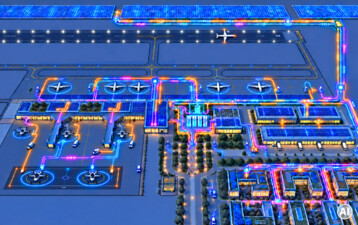
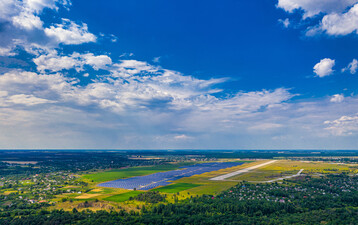
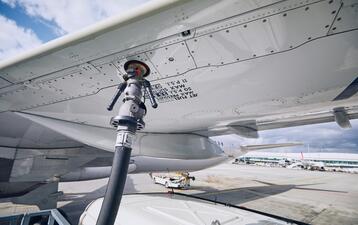
The electrification of airports is moving from isolated pilot projects to a strategic infrastructure task. Photovoltaic systems, electric ground support equipment, external aircraft power, battery storage, building electrification, road transport charging and future electric aircraft all depend on the same constrained airport grid, land, operational processes and safety system.
Regional and medium-sized airports have particular opportunities. They often control substantial roof, parking and open-space areas and can develop new roles as regional energy, mobility and logistics hubs. At the same time, they frequently face limited grid capacity, uncertain future demand, limited investment budgets and complex aviation safeguarding requirements. The key challenge is therefore not the procurement of individual chargers or solar systems, but the integration of energy demand, airport operations, spatial planning, safety, regulation and investment timing.
This three-day airsight course provides a structured method for assessing the airport baseline, identifying relevant electrification use cases and developing an integrated Energy Masterplan. The programme combines aeronautical and regulatory expertise, airport masterplanning and business development with specialist knowledge of electric aviation, grid connection, photovoltaic generation, battery storage and charging infrastructure.
A continuous group exercise runs through all three days. Participants assess a realistic regional airport, define demand scenarios, develop a preferred infrastructure concept and prepare a phased implementation roadmap. The resulting management-level output can be transferred directly to the participants' own organisations and provides a clear basis for subsequent feasibility studies, funding applications or implementation projects.
 10% Early Bird Discount on all 2027 public courses. Only valid until 31/01/2027!
 Training 5 or more people? Ask for an In-house course at your premises or online!
Course Details
Location:BerlinLanguage:English
Date:23.11. - 25.11.2026
Duration:3 days
Provider:airsight GmbH
Course Fee
For courses in Berlin:
All customers will be charged 19% VAT. For more information please see our About Taxes page.
The final price will be shown on your invoice.
Please note: If you want to register several particpants from your company but need a single invoice for each, please register each of them seperately.
Online registration is intended for companies, public authorities and other organisations. If you would like to attend as a private individual, please contact us at training@airsight.de.
Course Content
Day 1 - Understand the airport system and establish the baseline
Airport electrification in context
Decarbonisation, energy transition, regional airport opportunities, stakeholder landscapeRegulatory and institutional framework
ICAO/EASA principles, EU and national requirements, AFIR/TEN-T relevance, approvalsAirport electrification use cases
Airside, landside, buildings, ground power, eGSE, road mobility, future electric aircraftEnergy baseline and demand logic
Existing grid, load profiles, critical loads, data requirements, 2030/2035/2040 scenariosAviation-safe renewable energy
Roof PV, open-space PV, safeguarding, obstacle limitation, glint and glare, CNS/MET interfaces, wildlife and operational implicationsGroup exercise: baseline and problem definition
Assets, constraints, data gaps, stakeholders, first electrification opportunities
Day 2 - Airport operations, safety and implementation framework
Electric airport operations
eGSE, airport fleets, duty cycles, charging windows, stand and apron integrationGround power, PCA and airside charging
APU reduction, fixed and mobile supply, remote stands, charger locations, operational resilienceBuildings, heat and landside mobility
Terminals, hangars, heat pumps, parking, buses, logistics, Airport City demandSafety and operational risk management
High-voltage systems, batteries, RFFS, emergency access, Management of Change, cybersecurityBusiness models and governance
Ownership, concessions, utilities, Energy-as-a-Service, funding pathways, stakeholder responsibilitiesImplementation and procurement
Phasing, approvals, decision gates, owner’s requirements, construction in operation, CONOPSGroup exercise: demand scenarios and preliminary concept
Operational requirements, safety constraints, business options, technical questions
Day 3 - Energy infrastructure, electric aviation and final masterplan
Electrification of regional aviation
Aircraft market, trainer to commuter aircraft, route readiness, airport requirementsIntegrated energy and charging infrastructure
Grid connection, PV, battery storage, CCS2/MCS development, smart charging, redundancyImplementation planning in practice
Site analysis, demand modelling, infrastructure bottlenecks, German airfield case, lessons learnedFinal Airport Energy Masterplan development
Preferred concept, phasing, responsibilities, risks, decision gates, 90-day action planGroup presentations and expert review
Compliance, technical realism, airport integration, commercial logic, clarity of recommendationTransfer to participants’ own airports
Minimum data checklist, stakeholder workshop, next study package, implementation roadmap
Trainer
Christoph Struempfel-Seifert, M.Sc.
Head of airsight’s Sustainable Aviation department
Mr Struempfel-Seifert is an expert for sustainable aviation and is responsible for all project tasks related to sustainable aviation and environmental protection at airports. Furthermore, he is an appreciated trainer, sharing his knowledge and practical experience with other national and international aviation experts.
After graduating as Master of Science in Aeronautics and Astronautics from the Technical University of Berlin, he worked as a research assistant and lecturer at the Chair of Flight Guidance and Air Transport at the TU Berlin. In his scientific career, he focused on modelling aircraft noise and emissions, UAS noise measurements and calculation as well as the optimization of flight procedures with respect to environmental and eco-efficiency targets.
For airsight, he has conducted several environmental assessments, noise and emissions studies for various airports in Germany, Luxembourg, United Arab Emirates, Romania and the Philippines. As a recognized SME for aircraft noise modeling, he has extensive experience with the FAA's Aviation Environmental Design Tool (AEDT).
A second major focus of his work is to support international airports on their decarbonization journey with detailed studies on renewable energy, in particular the implementation of solar energy systems, including Singapore-Changi, Berlin, Cologne, Düsseldorf, Stuttgart and various other airports. His team is helping airports meet the challenges of the future through new, sustainable technologies, such as sustainable aircraft taxiing and e-GSE implementation.
Olaf Bünck, M.Sc.
Olaf is a Senior Consultant at airsight with over 30 years of experience in architecture, urban development and airport planning. He holds a Diplom-Ingenieur (Dipl.-Ing.) degree in Architecture and a master’s degree in Real Estate Management, both from TU Berlin. His focus areas include airport master planning, airport-city development, Advanced Air Mobility (AAM) concepts and airport electrification. His international portfolio spans Europe, the Middle East, Africa and Latin America, combining strategic infrastructure planning with real-estate expertise and commercially viable, phased development.
Dr. Stefan Breunig
Dr. Stefan Breunig is Managing Director for Partnerships & Strategy at ALBATROSS Holding GmbH. His professional background includes electric and hybrid-electric aircraft propulsion and the translation of aircraft development into practical airport energy and charging requirements. ALBATROSS develops integrated energy, mobility and logistics infrastructure with regional airports, including grid connection, photovoltaic generation, battery storage, charging, demand modelling and implementation pathways. As part of his obligation for the airsight training course “Airport Electrification and Energy Masterplanning”, Dr. Breunig delivers modules on electrification of regional aviation, integrated energy and charging infrastructure and implementation planning.
Target Group
- Aerodrome Operators
- Public Authorities
- Civil Aviation Authorities
- Ground Handling Service Providers
- Non-aviation Companies and Organizations
- Analysts
- Architects and Civil Engineers
- Engineers and Planners
- Non-aviation Personnel
- Operations Managers
- Regulators
Course Location
Participants are responsible for making their own travel arrangements. The accommodation and travel costs are at the charge of the participants. Please note that airsight does not perform any travel and hotel bookings for the participants. Rooms can however be booked directly by the participants by contacting the hotel. We would like to point out that from January 2025 a City Tax of 7.5% will be imposed on overnight stays for business and professional purposes in Berlin.
The course fee includes the registration, training material and examination. For non-virtual courses, coffee breaks and business lunch are also included.
Organisational Details
The course hours are scheduled as follows:
first training day: 10:00 am - 5:00 pm
mid-training days: 9:00 am - 5:00 pm
last training day: 8:00 am - 4:00 pm
Coffee breaks and business lunch are included in the course fee. At the end of the course, all participants will receive an airsight certificate based on EASA training regulations, which is highly recognised throughout the aviation industry.
About airsight Training

airsight Training course quality
airsight operates an ISO 9001 certified Quality Management System and pursues the objective to provide high quality services that fully meet the clients’ needs.
Course Details
Location:BerlinLanguage:English
Date:17.03. - 19.03.2027
Duration:3 days
Provider:airsight GmbH
Course Fee
For courses in Berlin:
All customers will be charged 19% VAT. For more information please see our About Taxes page.
The final price will be shown on your invoice.
Please note: If you want to register several particpants from your company but need a single invoice for each, please register each of them seperately.
Online registration is intended for companies, public authorities and other organisations. If you would like to attend as a private individual, please contact us at training@airsight.de.
Course Content
Day 1 - Understand the airport system and establish the baseline
Airport electrification in context
Decarbonisation, energy transition, regional airport opportunities, stakeholder landscapeRegulatory and institutional framework
ICAO/EASA principles, EU and national requirements, AFIR/TEN-T relevance, approvalsAirport electrification use cases
Airside, landside, buildings, ground power, eGSE, road mobility, future electric aircraftEnergy baseline and demand logic
Existing grid, load profiles, critical loads, data requirements, 2030/2035/2040 scenariosAviation-safe renewable energy
Roof PV, open-space PV, safeguarding, obstacle limitation, glint and glare, CNS/MET interfaces, wildlife and operational implicationsGroup exercise: baseline and problem definition
Assets, constraints, data gaps, stakeholders, first electrification opportunities
Day 2 - Airport operations, safety and implementation framework
Electric airport operations
eGSE, airport fleets, duty cycles, charging windows, stand and apron integrationGround power, PCA and airside charging
APU reduction, fixed and mobile supply, remote stands, charger locations, operational resilienceBuildings, heat and landside mobility
Terminals, hangars, heat pumps, parking, buses, logistics, Airport City demandSafety and operational risk management
High-voltage systems, batteries, RFFS, emergency access, Management of Change, cybersecurityBusiness models and governance
Ownership, concessions, utilities, Energy-as-a-Service, funding pathways, stakeholder responsibilitiesImplementation and procurement
Phasing, approvals, decision gates, owner’s requirements, construction in operation, CONOPSGroup exercise: demand scenarios and preliminary concept
Operational requirements, safety constraints, business options, technical questions
Day 3 - Energy infrastructure, electric aviation and final masterplan
Electrification of regional aviation
Aircraft market, trainer to commuter aircraft, route readiness, airport requirementsIntegrated energy and charging infrastructure
Grid connection, PV, battery storage, CCS2/MCS development, smart charging, redundancyImplementation planning in practice
Site analysis, demand modelling, infrastructure bottlenecks, German airfield case, lessons learnedFinal Airport Energy Masterplan development
Preferred concept, phasing, responsibilities, risks, decision gates, 90-day action planGroup presentations and expert review
Compliance, technical realism, airport integration, commercial logic, clarity of recommendationTransfer to participants’ own airports
Minimum data checklist, stakeholder workshop, next study package, implementation roadmap
Trainer
Christoph Struempfel-Seifert, M.Sc.
Head of airsight’s Sustainable Aviation department
Mr Struempfel-Seifert is an expert for sustainable aviation and is responsible for all project tasks related to sustainable aviation and environmental protection at airports. Furthermore, he is an appreciated trainer, sharing his knowledge and practical experience with other national and international aviation experts.
After graduating as Master of Science in Aeronautics and Astronautics from the Technical University of Berlin, he worked as a research assistant and lecturer at the Chair of Flight Guidance and Air Transport at the TU Berlin. In his scientific career, he focused on modelling aircraft noise and emissions, UAS noise measurements and calculation as well as the optimization of flight procedures with respect to environmental and eco-efficiency targets.
For airsight, he has conducted several environmental assessments, noise and emissions studies for various airports in Germany, Luxembourg, United Arab Emirates, Romania and the Philippines. As a recognized SME for aircraft noise modeling, he has extensive experience with the FAA's Aviation Environmental Design Tool (AEDT).
A second major focus of his work is to support international airports on their decarbonization journey with detailed studies on renewable energy, in particular the implementation of solar energy systems, including Singapore-Changi, Berlin, Cologne, Düsseldorf, Stuttgart and various other airports. His team is helping airports meet the challenges of the future through new, sustainable technologies, such as sustainable aircraft taxiing and e-GSE implementation.
Olaf Bünck, M.Sc.
Olaf is a Senior Consultant at airsight with over 30 years of experience in architecture, urban development and airport planning. He holds a Diplom-Ingenieur (Dipl.-Ing.) degree in Architecture and a master’s degree in Real Estate Management, both from TU Berlin. His focus areas include airport master planning, airport-city development, Advanced Air Mobility (AAM) concepts and airport electrification. His international portfolio spans Europe, the Middle East, Africa and Latin America, combining strategic infrastructure planning with real-estate expertise and commercially viable, phased development.
Dr. Stefan Breunig
Dr. Stefan Breunig is Managing Director for Partnerships & Strategy at ALBATROSS Holding GmbH. His professional background includes electric and hybrid-electric aircraft propulsion and the translation of aircraft development into practical airport energy and charging requirements. ALBATROSS develops integrated energy, mobility and logistics infrastructure with regional airports, including grid connection, photovoltaic generation, battery storage, charging, demand modelling and implementation pathways. As part of his obligation for the airsight training course “Airport Electrification and Energy Masterplanning”, Dr. Breunig delivers modules on electrification of regional aviation, integrated energy and charging infrastructure and implementation planning.
Target Group
- Aerodrome Operators
- Public Authorities
- Civil Aviation Authorities
- Ground Handling Service Providers
- Non-aviation Companies and Organizations
- Analysts
- Architects and Civil Engineers
- Engineers and Planners
- Non-aviation Personnel
- Operations Managers
- Regulators
Course Location
Participants are responsible for making their own travel arrangements. The accommodation and travel costs are at the charge of the participants. Please note that airsight does not perform any travel and hotel bookings for the participants. Rooms can however be booked directly by the participants by contacting the hotel. We would like to point out that from January 2025 a City Tax of 7.5% will be imposed on overnight stays for business and professional purposes in Berlin.
The course fee includes the registration, training material and examination. For non-virtual courses, coffee breaks and business lunch are also included.
Organisational Details
The course hours are scheduled as follows:
first training day: 10:00 am - 5:00 pm
last training day: 8:00 am - 4:00 pm
Coffee breaks and business lunch are included in the course fee. At the end of the course, all participants will receive an airsight certificate based on EASA training regulations, which is highly recognised throughout the aviation industry.
About airsight Training
airsight Training course quality
airsight operates an ISO 9001 certified Quality Management System and pursues the objective to provide high quality services that fully meet the clients’ needs.
Course Details
Location:BerlinLanguage:English
Date:26.10. - 28.10.2027
Duration:3 days
Provider:airsight GmbH
Course Fee
For courses in Berlin:
All customers will be charged 19% VAT. For more information please see our About Taxes page.
The final price will be shown on your invoice.
Please note: If you want to register several particpants from your company but need a single invoice for each, please register each of them seperately.
Online registration is intended for companies, public authorities and other organisations. If you would like to attend as a private individual, please contact us at training@airsight.de.
Course Content
Day 1 - Understand the airport system and establish the baseline
Airport electrification in context
Decarbonisation, energy transition, regional airport opportunities, stakeholder landscapeRegulatory and institutional framework
ICAO/EASA principles, EU and national requirements, AFIR/TEN-T relevance, approvalsAirport electrification use cases
Airside, landside, buildings, ground power, eGSE, road mobility, future electric aircraftEnergy baseline and demand logic
Existing grid, load profiles, critical loads, data requirements, 2030/2035/2040 scenariosAviation-safe renewable energy
Roof PV, open-space PV, safeguarding, obstacle limitation, glint and glare, CNS/MET interfaces, wildlife and operational implicationsGroup exercise: baseline and problem definition
Assets, constraints, data gaps, stakeholders, first electrification opportunities
Day 2 - Airport operations, safety and implementation framework
Electric airport operations
eGSE, airport fleets, duty cycles, charging windows, stand and apron integrationGround power, PCA and airside charging
APU reduction, fixed and mobile supply, remote stands, charger locations, operational resilienceBuildings, heat and landside mobility
Terminals, hangars, heat pumps, parking, buses, logistics, Airport City demandSafety and operational risk management
High-voltage systems, batteries, RFFS, emergency access, Management of Change, cybersecurityBusiness models and governance
Ownership, concessions, utilities, Energy-as-a-Service, funding pathways, stakeholder responsibilitiesImplementation and procurement
Phasing, approvals, decision gates, owner’s requirements, construction in operation, CONOPSGroup exercise: demand scenarios and preliminary concept
Operational requirements, safety constraints, business options, technical questions
Day 3 - Energy infrastructure, electric aviation and final masterplan
Electrification of regional aviation
Aircraft market, trainer to commuter aircraft, route readiness, airport requirementsIntegrated energy and charging infrastructure
Grid connection, PV, battery storage, CCS2/MCS development, smart charging, redundancyImplementation planning in practice
Site analysis, demand modelling, infrastructure bottlenecks, German airfield case, lessons learnedFinal Airport Energy Masterplan development
Preferred concept, phasing, responsibilities, risks, decision gates, 90-day action planGroup presentations and expert review
Compliance, technical realism, airport integration, commercial logic, clarity of recommendationTransfer to participants’ own airports
Minimum data checklist, stakeholder workshop, next study package, implementation roadmap
Trainer
Christoph Struempfel-Seifert, M.Sc.
Head of airsight’s Sustainable Aviation department
Mr Struempfel-Seifert is an expert for sustainable aviation and is responsible for all project tasks related to sustainable aviation and environmental protection at airports. Furthermore, he is an appreciated trainer, sharing his knowledge and practical experience with other national and international aviation experts.
After graduating as Master of Science in Aeronautics and Astronautics from the Technical University of Berlin, he worked as a research assistant and lecturer at the Chair of Flight Guidance and Air Transport at the TU Berlin. In his scientific career, he focused on modelling aircraft noise and emissions, UAS noise measurements and calculation as well as the optimization of flight procedures with respect to environmental and eco-efficiency targets.
For airsight, he has conducted several environmental assessments, noise and emissions studies for various airports in Germany, Luxembourg, United Arab Emirates, Romania and the Philippines. As a recognized SME for aircraft noise modeling, he has extensive experience with the FAA's Aviation Environmental Design Tool (AEDT).
A second major focus of his work is to support international airports on their decarbonization journey with detailed studies on renewable energy, in particular the implementation of solar energy systems, including Singapore-Changi, Berlin, Cologne, Düsseldorf, Stuttgart and various other airports. His team is helping airports meet the challenges of the future through new, sustainable technologies, such as sustainable aircraft taxiing and e-GSE implementation.
Olaf Bünck, M.Sc.
Olaf is a Senior Consultant at airsight with over 30 years of experience in architecture, urban development and airport planning. He holds a Diplom-Ingenieur (Dipl.-Ing.) degree in Architecture and a master’s degree in Real Estate Management, both from TU Berlin. His focus areas include airport master planning, airport-city development, Advanced Air Mobility (AAM) concepts and airport electrification. His international portfolio spans Europe, the Middle East, Africa and Latin America, combining strategic infrastructure planning with real-estate expertise and commercially viable, phased development.
Dr. Stefan Breunig
Dr. Stefan Breunig is Managing Director for Partnerships & Strategy at ALBATROSS Holding GmbH. His professional background includes electric and hybrid-electric aircraft propulsion and the translation of aircraft development into practical airport energy and charging requirements. ALBATROSS develops integrated energy, mobility and logistics infrastructure with regional airports, including grid connection, photovoltaic generation, battery storage, charging, demand modelling and implementation pathways. As part of his obligation for the airsight training course “Airport Electrification and Energy Masterplanning”, Dr. Breunig delivers modules on electrification of regional aviation, integrated energy and charging infrastructure and implementation planning.
Target Group
- Aerodrome Operators
- Public Authorities
- Civil Aviation Authorities
- Ground Handling Service Providers
- Non-aviation Companies and Organizations
- Analysts
- Architects and Civil Engineers
- Engineers and Planners
- Non-aviation Personnel
- Operations Managers
- Regulators
Course Location
Participants are responsible for making their own travel arrangements. The accommodation and travel costs are at the charge of the participants. Please note that airsight does not perform any travel and hotel bookings for the participants. Rooms can however be booked directly by the participants by contacting the hotel. We would like to point out that from January 2025 a City Tax of 7.5% will be imposed on overnight stays for business and professional purposes in Berlin.
The course fee includes the registration, training material and examination. For non-virtual courses, coffee breaks and business lunch are also included.
Organisational Details
The course hours are scheduled as follows:
first training day: 10:00 am - 5:00 pm
mid-training days: 9:00 am - 5:00 pm
last training day: 8:00 am - 4:00 pm
Coffee breaks and business lunch are included in the course fee. At the end of the course, all participants will receive an airsight certificate based on EASA training regulations, which is highly recognised throughout the aviation industry.
About airsight Training
airsight Training course quality
airsight operates an ISO 9001 certified Quality Management System and pursues the objective to provide high quality services that fully meet the clients’ needs.
Course Details
Location:In-houseLanguage:English
Duration:3 days
Provider:airsight GmbH
Course Content
Day 1 - Understand the airport system and establish the baseline
Airport electrification in context
Decarbonisation, energy transition, regional airport opportunities, stakeholder landscapeRegulatory and institutional framework
ICAO/EASA principles, EU and national requirements, AFIR/TEN-T relevance, approvalsAirport electrification use cases
Airside, landside, buildings, ground power, eGSE, road mobility, future electric aircraftEnergy baseline and demand logic
Existing grid, load profiles, critical loads, data requirements, 2030/2035/2040 scenariosAviation-safe renewable energy
Roof PV, open-space PV, safeguarding, obstacle limitation, glint and glare, CNS/MET interfaces, wildlife and operational implicationsGroup exercise: baseline and problem definition
Assets, constraints, data gaps, stakeholders, first electrification opportunities
Day 2 - Airport operations, safety and implementation framework
Electric airport operations
eGSE, airport fleets, duty cycles, charging windows, stand and apron integrationGround power, PCA and airside charging
APU reduction, fixed and mobile supply, remote stands, charger locations, operational resilienceBuildings, heat and landside mobility
Terminals, hangars, heat pumps, parking, buses, logistics, Airport City demandSafety and operational risk management
High-voltage systems, batteries, RFFS, emergency access, Management of Change, cybersecurityBusiness models and governance
Ownership, concessions, utilities, Energy-as-a-Service, funding pathways, stakeholder responsibilitiesImplementation and procurement
Phasing, approvals, decision gates, owner’s requirements, construction in operation, CONOPSGroup exercise: demand scenarios and preliminary concept
Operational requirements, safety constraints, business options, technical questions
Day 3 - Energy infrastructure, electric aviation and final masterplan
Electrification of regional aviation
Aircraft market, trainer to commuter aircraft, route readiness, airport requirementsIntegrated energy and charging infrastructure
Grid connection, PV, battery storage, CCS2/MCS development, smart charging, redundancyImplementation planning in practice
Site analysis, demand modelling, infrastructure bottlenecks, German airfield case, lessons learnedFinal Airport Energy Masterplan development
Preferred concept, phasing, responsibilities, risks, decision gates, 90-day action planGroup presentations and expert review
Compliance, technical realism, airport integration, commercial logic, clarity of recommendationTransfer to participants’ own airports
Minimum data checklist, stakeholder workshop, next study package, implementation roadmap
Trainer
Christoph Struempfel-Seifert, M.Sc.
Head of airsight’s Sustainable Aviation department
Mr Struempfel-Seifert is an expert for sustainable aviation and is responsible for all project tasks related to sustainable aviation and environmental protection at airports. Furthermore, he is an appreciated trainer, sharing his knowledge and practical experience with other national and international aviation experts.
After graduating as Master of Science in Aeronautics and Astronautics from the Technical University of Berlin, he worked as a research assistant and lecturer at the Chair of Flight Guidance and Air Transport at the TU Berlin. In his scientific career, he focused on modelling aircraft noise and emissions, UAS noise measurements and calculation as well as the optimization of flight procedures with respect to environmental and eco-efficiency targets.
For airsight, he has conducted several environmental assessments, noise and emissions studies for various airports in Germany, Luxembourg, United Arab Emirates, Romania and the Philippines. As a recognized SME for aircraft noise modeling, he has extensive experience with the FAA's Aviation Environmental Design Tool (AEDT).
A second major focus of his work is to support international airports on their decarbonization journey with detailed studies on renewable energy, in particular the implementation of solar energy systems, including Singapore-Changi, Berlin, Cologne, Düsseldorf, Stuttgart and various other airports. His team is helping airports meet the challenges of the future through new, sustainable technologies, such as sustainable aircraft taxiing and e-GSE implementation.
Olaf Bünck, M.Sc.
Olaf is a Senior Consultant at airsight with over 30 years of experience in architecture, urban development and airport planning. He holds a Diplom-Ingenieur (Dipl.-Ing.) degree in Architecture and a master’s degree in Real Estate Management, both from TU Berlin. His focus areas include airport master planning, airport-city development, Advanced Air Mobility (AAM) concepts and airport electrification. His international portfolio spans Europe, the Middle East, Africa and Latin America, combining strategic infrastructure planning with real-estate expertise and commercially viable, phased development.
Dr. Stefan Breunig
Dr. Stefan Breunig is Managing Director for Partnerships & Strategy at ALBATROSS Holding GmbH. His professional background includes electric and hybrid-electric aircraft propulsion and the translation of aircraft development into practical airport energy and charging requirements. ALBATROSS develops integrated energy, mobility and logistics infrastructure with regional airports, including grid connection, photovoltaic generation, battery storage, charging, demand modelling and implementation pathways. As part of his obligation for the airsight training course “Airport Electrification and Energy Masterplanning”, Dr. Breunig delivers modules on electrification of regional aviation, integrated energy and charging infrastructure and implementation planning.
Target Group
- Aerodrome Operators
- Public Authorities
- Civil Aviation Authorities
- Ground Handling Service Providers
- Non-aviation Companies and Organizations
- Analysts
- Architects and Civil Engineers
- Engineers and Planners
- Non-aviation Personnel
- Operations Managers
- Regulators
Organisational Details
airsight offers this training course on request, worldwide. At the end of the course, all participants will receive an airsight certificate based on EASA training regulations, which is highly recognised throughout the aviation industry.
About airsight Training
airsight Training course quality
airsight operates an ISO 9001 certified Quality Management System and pursues the objective to provide high quality services that fully meet the clients’ needs.