NEW
New Obstacle Limitation Surfaces and Assessment Requirements
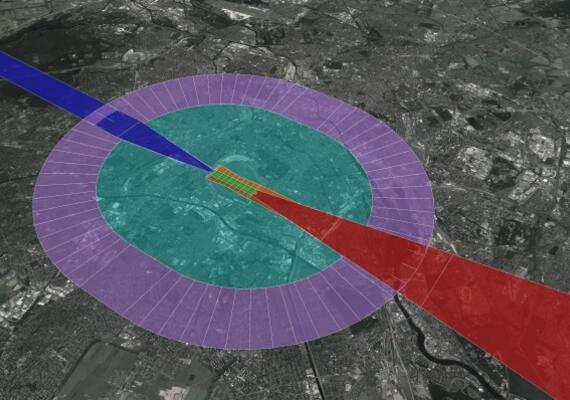
This course focuses on the transition to and comprehensive examination of the New OLS and their concept, including ADG, detailed OFS/OES geometry, tailored OES, assessment criteria, and implications for obstacle assessments.

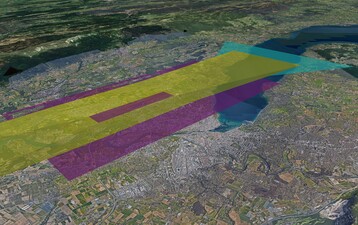
Safe airport operations require permanent monitoring of obstacles in the close proximity of airports. The construction of new infrastructure or changes to airport operations require systematic obstacle evaluations and assessments to maintain an acceptable level of safety.
International regulations from the International Civil Aviation Organization (ICAO) as described in Annex 14 Vol. I as well as regulations from European Union Aviation Safety Agency (EASA) as described in the CS-ADR-DSN specify airspace around aerodromes to be maintained free from obstacles. For that purpose, obstacle limitation surfaces (OLS) are described, which ideally shall not be penetrated by an object. OLS infringements may be acceptable though, if an obstacle assessment or aeronautical study shows that there is no adverse impact on the safety of flight operations.
Nevertheless, history shows that world-wide the OLS are penetrated by new obstacles, and it becomes more difficult to protect the surfaces against new obstructions. The reasons are numerous and include unclear objectives of the OLS, inconsistencies between ICAO Annex 14, Annex 6, and PANS OPS requirements as well as a mismatch between the obstacle requirements of the surfaces and the complex impact of obstacles on the operations.
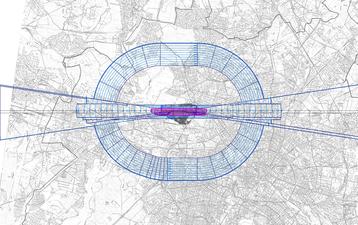
To address the deficiencies of the current OLS, a revised OLS has been adopted by ICAO in 2025. A new twofold concept, which has been developed by the Obstacle Limitation Surfaces Task Force (OLSTF), now comprises of the obstacle free surfaces (OFS) and obstacle evaluation surfaces (OES). Furthermore, a new code system, the aeroplane design groups (ADG), for the design of the OFS and OES was introduced. The core principle of the OES design is a high degree of flexibility, so that the surface systems can be adapted to individual local requirements. As part of an obstacle assessment, the affected flight procedures must be determined and the impact on each procedure must be examined individually.
The objective of this training course is to provide a comprehensive overview of the revised new OFS and OES as described in ICAO Annex 14 Vol. 1. In particular, the adaptability of the OES, which is a central component of the new concept, and the associated challenges will be examined in detail during the course. In addition, the changes to obstacle assessment resulting from the concept change will be discussed.
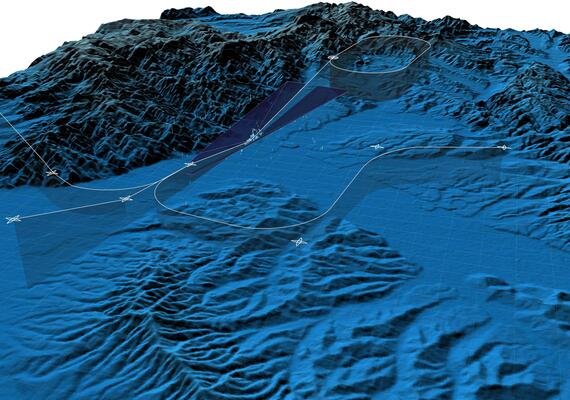
An introduction of instrument flight procedures and their obstacle protection areas (according to ICAO Document 8168 "PANS-OPS") relevant to the establishment and assessment of the OFS and OES is provided.
Attendees will learn how to establish the relevant obstacle free surfaces (OFS), gain insights into various design options for the obstacle evaluation surfaces (OES) and learn to evaluate the significance of penetrating obstacles and to develop appropriate safety measures where necessary.
This course is designed for all people involved in this complex subject, including aerodrome, Civil Aviation Authority personnel, or project developers.
 Training 5 or more people? Ask for an In-house course at your premises or online!
Course Details
Location:BerlinLanguage:English
Date:22.06. - 24.06.2026
Duration:3 days
Provider:airsight GmbH
Course Fee
For courses in Berlin:
All customers will be charged 19% VAT. For more information please see our About Taxes page.
The final price will be shown on your invoice.
Please note: If you want to register several particpants from your company but need a single invoice for each, please register each of them seperately.
Course Content
Regulations and fundamentals
- International Civil Aviation Organisation (ICAO), European Aviation Safety Agency (EASA)
- ICAO Obstacle Limitation Surfaces Task Force (OLSTF)
- Categories of aircraft, aerodromes, runways and flight procedures
- New aeroplane design groups (ADG)
Recap of ICAO Annex 14 Vol. 1 / EASA CS-ADR-DSN obstacle limitation surfaces (OLS)
- Obstacle limitation surfaces (OLS)
- Obstacle free zone (OFZ)
- Limitations of and challenges with the old OLS
Introduction to instrument flight procedures (ICAO Document 8168 „PANS-OPS“)
- Basic principles of procedure protection
- Overview of protection areas for standard instrument departure procedures (SID) and instrument approach procedures
New ICAO Annex 14 Vol. 1 obstacle limitation surfaces (OLS)
- Background and the new concept
- Obstacle limitation requirements
Obstacle Free Surfaces (OFS)
- Implementation of the surfaces
- Approach surface
- Transitional surface
- Inner approach, inner transitional and balked landing surfaces
Standard Obstacle Evaluation Surfaces (OES)
- Implementation of the surfaces
- Take-off climb surface
- Instrument departure surface
- Horizontal surface
- Surface for straight-in instrument approaches
- Surface for precision approaches
Specific Obstacle Evaluation Surfaces (OES)
- Modification of standard OES
- Tailored OES (taking into account other aspects, e.g. CNS, windshear, helicopter operations)
Aeronautical studies / impact assessments
Trainer
Dipl.-Ing. Sierk Törl
Sierk is a team member of airsight’s “Aerodrome Safeguarding and Flight Procedures” division. At airsight, Sierk gained extensive project knowledge with regards to obstacle assessments and CNS safeguarding studies at airports. Through international projects, e.g. for the airports of Accra, Dubai, Malta, Nice and Montego Bay as well as for various wind energy and project planning companies, he acquired a wide range of experience.
Prior to joining airsight, Sierk worked for a German airline as a flight operations engineer with a special focus on aircraft performance as well as aircraft weight and balance. Furthermore, he supported the airline’s flight crew training department and conducted pilot trainings as part of the pilot’s type rating.
Oliver Schade, M.Sc.
Oliver studied Aeronautics and Astronautics at the Technical University of Berlin (Technische Universität Berlin) where he was active in research and teaching as well. He joined airsight’s “aerodrome safeguarding and flight procedures” division in early 2023.
At airsight, Oliver conducts obstacle assessments and aeronautical studies for proposed developments such as wind farms. Currently, he undergoes training to become a flight procedure designer.
He holds a pilot’s license with an instrument rating, undergoes qualification for the Commercial Pilot License (CPL) and has been teaching other pilots radio telephony phraseology for several years.
Target Group
- Aerodrome safety managers
- Aerodrome operations managers, engineers and planners
- Air traffic control staff
- Aviation safety experts
- Civil Aviation Authorities staff
- Flight operation staff (aircraft operator)
- Architects and civil engineers
Course Location
Participants are responsible for making their own travel arrangements. The accommodation and travel costs are at the charge of the participants. Please note that airsight does not perform any travel and hotel bookings for the participants. Rooms can however be booked directly by the participants by contacting the hotel. We would like to point out that from January 2025 a City Tax of 7.5% will be imposed on overnight stays for business and professional purposes in Berlin.
The course fee includes the registration, training material and examination. For non-virtual courses, coffee breaks and business lunch are also included.
Organisational Details
The course hours are scheduled as follows:
first training day: 10:00 am - 5:00 pm
mid-training days: 9:00 am - 5:00 pm
last training day: 8:00 am - 4:00 pm
Coffee breaks and business lunch are included in the course fee. At the end of the course, all participants will receive an airsight certificate based on EASA training regulations, which is highly recognised throughout the aviation industry.
About airsight Training

airsight Training course quality
airsight operates an ISO 9001 certified Quality Management System and pursues the objective to provide high quality services that fully meet the clients’ needs.
Course Details
Location:BerlinLanguage:English
Date:23.11. - 25.11.2026
Duration:3 days
Provider:airsight GmbH
Course Fee
For courses in Berlin:
All customers will be charged 19% VAT. For more information please see our About Taxes page.
The final price will be shown on your invoice.
Please note: If you want to register several particpants from your company but need a single invoice for each, please register each of them seperately.
Course Content
Regulations and fundamentals
- International Civil Aviation Organisation (ICAO), European Aviation Safety Agency (EASA)
- ICAO Obstacle Limitation Surfaces Task Force (OLSTF)
- Categories of aircraft, aerodromes, runways and flight procedures
- New aeroplane design groups (ADG)
Recap of ICAO Annex 14 Vol. 1 / EASA CS-ADR-DSN obstacle limitation surfaces (OLS)
- Obstacle limitation surfaces (OLS)
- Obstacle free zone (OFZ)
- Limitations of and challenges with the old OLS
Introduction to instrument flight procedures (ICAO Document 8168 „PANS-OPS“)
- Basic principles of procedure protection
- Overview of protection areas for standard instrument departure procedures (SID) and instrument approach procedures
New ICAO Annex 14 Vol. 1 obstacle limitation surfaces (OLS)
- Background and the new concept
- Obstacle limitation requirements
Obstacle Free Surfaces (OFS)
- Implementation of the surfaces
- Approach surface
- Transitional surface
- Inner approach, inner transitional and balked landing surfaces
Standard Obstacle Evaluation Surfaces (OES)
- Implementation of the surfaces
- Take-off climb surface
- Instrument departure surface
- Horizontal surface
- Surface for straight-in instrument approaches
- Surface for precision approaches
Specific Obstacle Evaluation Surfaces (OES)
- Modification of standard OES
- Tailored OES (taking into account other aspects, e.g. CNS, windshear, helicopter operations)
Aeronautical studies / impact assessments
Trainer
Dipl.-Ing. Sierk Törl
Sierk is a team member of airsight’s “Aerodrome Safeguarding and Flight Procedures” division. At airsight, Sierk gained extensive project knowledge with regards to obstacle assessments and CNS safeguarding studies at airports. Through international projects, e.g. for the airports of Accra, Dubai, Malta, Nice and Montego Bay as well as for various wind energy and project planning companies, he acquired a wide range of experience.
Prior to joining airsight, Sierk worked for a German airline as a flight operations engineer with a special focus on aircraft performance as well as aircraft weight and balance. Furthermore, he supported the airline’s flight crew training department and conducted pilot trainings as part of the pilot’s type rating.
Oliver Schade, M.Sc.
Oliver studied Aeronautics and Astronautics at the Technical University of Berlin (Technische Universität Berlin) where he was active in research and teaching as well. He joined airsight’s “aerodrome safeguarding and flight procedures” division in early 2023.
At airsight, Oliver conducts obstacle assessments and aeronautical studies for proposed developments such as wind farms. Currently, he undergoes training to become a flight procedure designer.
He holds a pilot’s license with an instrument rating, undergoes qualification for the Commercial Pilot License (CPL) and has been teaching other pilots radio telephony phraseology for several years.
Target Group
- Aerodrome safety managers
- Aerodrome operations managers, engineers and planners
- Air traffic control staff
- Aviation safety experts
- Civil Aviation Authorities staff
- Flight operation staff (aircraft operator)
- Architects and civil engineers
Course Location
Participants are responsible for making their own travel arrangements. The accommodation and travel costs are at the charge of the participants. Please note that airsight does not perform any travel and hotel bookings for the participants. Rooms can however be booked directly by the participants by contacting the hotel. We would like to point out that from January 2025 a City Tax of 7.5% will be imposed on overnight stays for business and professional purposes in Berlin.
The course fee includes the registration, training material and examination. For non-virtual courses, coffee breaks and business lunch are also included.
Organisational Details
The course hours are scheduled as follows:
first training day: 10:00 am - 5:00 pm
mid-training days: 9:00 am - 5:00 pm
last training day: 8:00 am - 4:00 pm
Coffee breaks and business lunch are included in the course fee. At the end of the course, all participants will receive an airsight certificate based on EASA training regulations, which is highly recognised throughout the aviation industry.
About airsight Training
airsight Training course quality
airsight operates an ISO 9001 certified Quality Management System and pursues the objective to provide high quality services that fully meet the clients’ needs.
Course Details
Location:In-houseLanguage:English
Duration:3 days
Provider:airsight GmbH
Course Content
Regulations and fundamentals
- International Civil Aviation Organisation (ICAO), European Aviation Safety Agency (EASA)
- ICAO Obstacle Limitation Surfaces Task Force (OLSTF)
- Categories of aircraft, aerodromes, runways and flight procedures
- New aeroplane design groups (ADG)
Recap of ICAO Annex 14 Vol. 1 / EASA CS-ADR-DSN obstacle limitation surfaces (OLS)
- Obstacle limitation surfaces (OLS)
- Obstacle free zone (OFZ)
- Limitations of and challenges with the old OLS
Introduction to instrument flight procedures (ICAO Document 8168 „PANS-OPS“)
- Basic principles of procedure protection
- Overview of protection areas for standard instrument departure procedures (SID) and instrument approach procedures
New ICAO Annex 14 Vol. 1 obstacle limitation surfaces (OLS)
- Background and the new concept
- Obstacle limitation requirements
Obstacle Free Surfaces (OFS)
- Implementation of the surfaces
- Approach surface
- Transitional surface
- Inner approach, inner transitional and balked landing surfaces
Standard Obstacle Evaluation Surfaces (OES)
- Implementation of the surfaces
- Take-off climb surface
- Instrument departure surface
- Horizontal surface
- Surface for straight-in instrument approaches
- Surface for precision approaches
Specific Obstacle Evaluation Surfaces (OES)
- Modification of standard OES
- Tailored OES (taking into account other aspects, e.g. CNS, windshear, helicopter operations)
Aeronautical studies / impact assessments
Trainer
Oliver Schade, M.Sc.
Oliver studied Aeronautics and Astronautics at the Technical University of Berlin (Technische Universität Berlin) where he was active in research and teaching as well. He joined airsight’s “aerodrome safeguarding and flight procedures” division in early 2023.
At airsight, Oliver conducts obstacle assessments and aeronautical studies for proposed developments such as wind farms. Currently, he undergoes training to become a flight procedure designer.
He holds a pilot’s license with an instrument rating, undergoes qualification for the Commercial Pilot License (CPL) and has been teaching other pilots radio telephony phraseology for several years.
Dipl.-Ing. Sierk Törl
Sierk is a team member of airsight’s “Aerodrome Safeguarding and Flight Procedures” division. At airsight, Sierk gained extensive project knowledge with regards to obstacle assessments and CNS safeguarding studies at airports. Through international projects, e.g. for the airports of Accra, Dubai, Malta, Nice and Montego Bay as well as for various wind energy and project planning companies, he acquired a wide range of experience.
Prior to joining airsight, Sierk worked for a German airline as a flight operations engineer with a special focus on aircraft performance as well as aircraft weight and balance. Furthermore, he supported the airline’s flight crew training department and conducted pilot trainings as part of the pilot’s type rating.
Target Group
- Aerodrome safety managers
- Aerodrome operations managers, engineers and planners
- Air traffic control staff
- Aviation safety experts
- Civil Aviation Authorities staff
- Flight operation staff (aircraft operator)
- Architects and civil engineers
Organisational Details
airsight offers this training course on request, worldwide. At the end of the course, all participants will receive an airsight certificate based on EASA training regulations, which is highly recognised throughout the aviation industry.
About airsight Training
airsight Training course quality
airsight operates an ISO 9001 certified Quality Management System and pursues the objective to provide high quality services that fully meet the clients’ needs.