Advanced Airside Airport Operations
Contact Training Department


Ensuring safe, compliant, and efficient airside operations is one of the most demanding challenges facing modern aerodromes. This enhanced four-day training course provides participants with the regulatory knowledge, operational insight, and practical experience required to manage complex airside activities under both normal and contingency conditions. It offers a comprehensive understanding of how aerodrome operators can maintain operational performance while meeting stringent ICAO and EASA safety requirements.
Building upon key international regulatory frameworks, including ICAO Annexes, the EASA Basic Regulation, and Commission Regulation (EU) No. 139/2014, the course provides practical guidance on their implementation within the aerodrome environment. Participants will explore the responsibilities of aerodrome operators, the interaction between Air Traffic Control (ATC), Apron Management Services (AMS), Ground Handling organisations, and Airport Operations Centres (APOC), as well as the role of Airport Collaborative Decision Making (A-CDM) in supporting airport capacity and operational resilience.
Particular emphasis is placed on operational coordination, aeronautical data management, apron safety, aircraft refuelling activities, low visibility operations, airport capacity management, and contingency planning. Through interactive case studies and operational scenarios, participants will learn how regulatory requirements translate into day-to-day decision making and safety-critical operational processes.
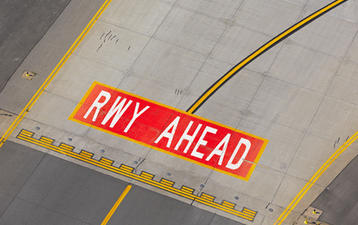
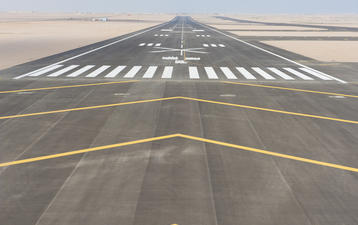
A distinctive feature of the course is the inclusion of a flight simulator familiarisation session, providing participants with the opportunity to experience airport operations from the pilot's perspective. This practical session highlights how aeronautical information, including AIP publications, NOTAMs, airport infrastructure, surface markings, lighting systems, and low visibility procedures, directly affects flight preparation, decision making, and aircraft operations. Participants will gain a deeper appreciation of the importance of accurate aeronautical data and operational coordination in maintaining safety and efficiency across the entire airport system.
By the end of the course, participants will be able to evaluate operational risks, ensure regulatory compliance, support airport capacity optimisation, and implement effective contingency measures to maintain safe and resilient airport operations.
This course is designed for professionals working in aerodrome operations, safety management, compliance monitoring, apron management services, air traffic services, airport operations centres, ground handling organisations, and competent authorities. It is particularly suited to experienced personnel seeking to deepen their technical expertise and strengthen their capability to manage advanced operational scenarios within the airside environment.
 Training 5 or more people? Ask for an In-house course at your premises or online!
Course Details
Location:In-houseLanguage:English / Italian
Duration:3 days
Provider:airsight Italy Srl
Course Content
Regulatory and Operational Foundations
- Introduction: Aerodrome operator responsibilities and accountability
- ICAO regulatory framework, EASA Basic Regulation and EU Regulation (EU) No. 139/2014
- Recent and forthcoming regulatory developments affecting airside operations
- Operational safety requirements and aerodrome compliance
- Ground Handling Regulation (EU) 2025/20 and safety interfaces
Operational Services and Airport Coordination
- Air Traffic Control Services (ATC) and coordination with airport operations
- Meteorological Services (MET) and impact on operational decision-making
- ICAO standard aeronautical phraseology
- Aeronautical Data Management and information quality requirements
- Airport information systems: AIP, NOTAM and operational publications
- Apron Management Services (AMS): roles, responsibilities and coordination with stakeholders
- Airport Collaborative Decision Making (A-CDM) and Airport Operations Centres (APOC)
- Ground Handling Services: operational interfaces, responsibilities and safety management
Advanced Operational Scenarios and Contingencies
- Airside works planning and operational limitations
- Low Visibility Procedures (LVP): requirements, procedures and stakeholder coordination
- Emergency Response Planning (ERP) and operational impact
- Capacity reduction scenarios and operational recovery
- Contingent runway planning
- Reduced runway length operations
- Business continuity and airport resilience
Airport Operations from the Pilot's Perspective
- Flight preparation using AIP, NOTAM and aeronautical information
- The importance of aeronautical data quality for safe flight operations
- Airport infrastructure and aerodrome chart interpretation
- Runway, taxiway, signage and lighting systems from the cockpit perspective
- Low Visibility Procedures (LVP) from the pilot's perspective
- Surface movement, situational awareness and operational decision-making
Flight Simulator Familiarisation Session
- Practical simulator exercises based on real airport operating scenarios
- Analysis of the interaction between flight crews and airport operational services
- Application of airside operational concepts in a simulated flight environment
- Operational lessons learned and best practices
Trainer
Daniele Occhiato
Daniele is a trainer with over 12 years of experience in the aviation industry.
He holds a degree in aerospace engineering and a master's degree in Aviation Safety. In 2020 he joined airsight's team in the safety & operations department, as a project engineer and auditor, using his experience in airport operations, apron management service, ground handling, Safety Management System, airport emergency plans, auditing and compliance management. Since 2024 he is Director of airsight Italy S.r.l.
Daniele has held positions in the airport sector as a certification figure and has an excellent knowledge of regulations (ICAO/EASA), international best practices and their implementation in the airport environment.
In airsight, he contributes to the analysis of risks related to major upgrading works, revision of airport contingency plans and compliance audits in the international context.
Dirk Bresser
Dirk Bresser brings over two decades of extensive experience in airport operations, safety, and innovation. His background includes roles at the Royal Schiphol Group and at Eurocontrol, where he played a role in integrating local airport processes with the European network to enhance predictability and safety in daily operations. As the founding chair of the Schiphol Ground Movement Safety Team (ISMS), Dirk has led initiatives that balance capacity, safety, and sustainability, underscoring his commitment to operational safety. He initiated sustainable taxiing at Schiphol airport back in 2020 and led Europe’s first working group for regulators and led tests on autonomous driving on airside. In his position as Airport Operations Plan (AOP) and Network Operations Plan (NOP) Lead within Schiphol’s Airport Operation Centre (APOC), Dirk emphasized collaborative decision-making, ensuring seamless operations among multiple stakeholders.
To further structurally build on airport/network integration, Dirk has been involved in authoring the ACI AOP implementation guide and was part of the ANI Taskforce to align the needs of airports with compliancy and quality standards.
Target Group
- Aerodrome Operator personnel
- personnel working in the airport operation departments, safety and compliance departments, training departments and nominated persons
- personnel of AMS providers
- personnel of ATS providers
- personnel of Competent Authorities
Organisational Details
airsight offers this training course on request, worldwide. At the end of the course, all participants will receive an airsight certificate based on EASA training regulations, which is highly recognised throughout the aviation industry.
About airsight Training

airsight Training course quality
airsight operates an ISO 9001 certified Quality Management System and pursues the objective to provide high quality services that fully meet the clients’ needs.