Conduct of aeronautical study addressing a given heliport serving helicopter emergency medical services (HEMS)

Many hospitals are equipped with heliports for airborne rescue missions and patient transport (Helicopter Emergency Medical Services, HEMS). These heliports were usually designed on the basis of relevant design regulations and approved by the competent aviation authority.
Over time, not only the national and international design specifications change, but also the types of helicopters used and the specifics of the flight operations, which require a review and, if necessary, adjustment of the approved situation. airsight supports hospital operators and their competent aviation authorities, e.g. with the conduct of compliance assessments with regard to the given helicopter infrastructure as well as the preparation of relevant aeronautical studies.
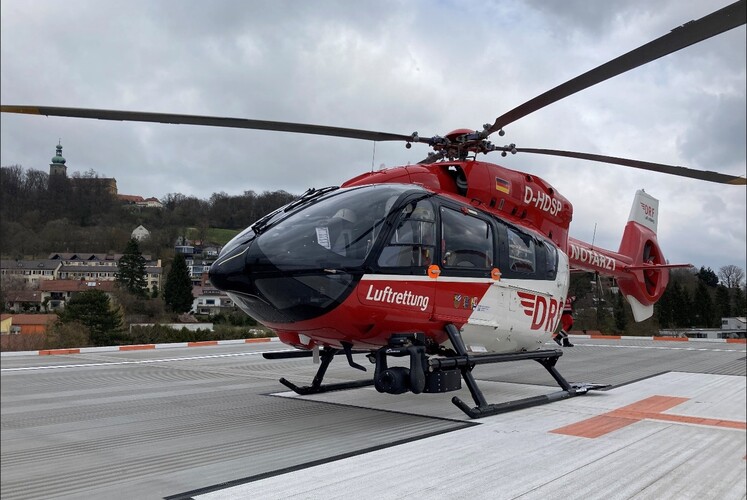
Photo: Reinhard Fraunholz, licensed under CC BY-SA 4.0
The subject of a recent study prepared by airsight was the adaptation and update of the approval of a HEMS heliport located in northern Germany. To this end, esp. the current condition of the ground airfield and the obstacle environment were considered and assessed against the applicable provisions considering today's helicopter flight operations. The aim was to derive a package of measures to ensure safe and approvable flight operations at day and night.
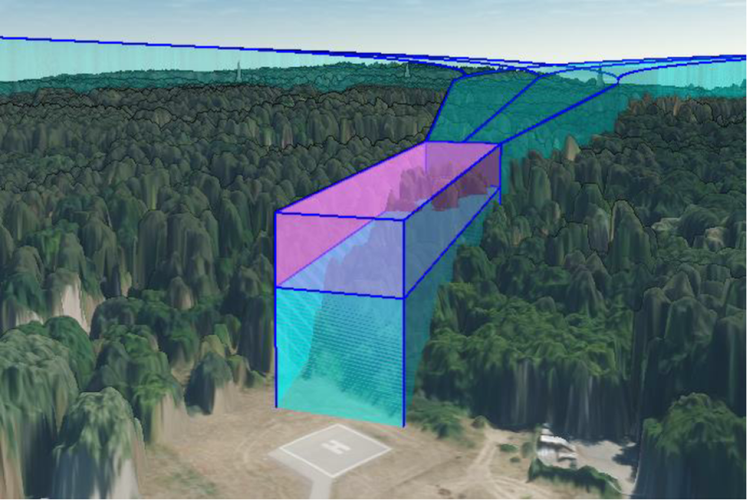
A particular challenge was the obstacle environment of the heliport, which is characterized by buildings, vegetation and traffic areas. It was recommended that the approach and departure procedures considering specific rearward take-off procedures be adapted in such a way that sensitive areas (e.g. buildings, traffic areas) and safety-relevant obstacles in the area of the planned corridors are avoided. Also, the ground infrastructure, including the given markings and lighting, must be designed in accordance with the relevant regulations (esp. ICAO Annex 14, Vol. II, Heliports). In addition, organisational measures were recommended to reduce risks due to rotor downwash on adjacent traffic areas. Overall, a coordinated package of measures was created that takes into account approvability, safety and practicability.
If you also need support in testing and adapting your helicopter infrastructure or the associated approval, please contact us by e-mail or via our website.
Another aspect worth considering: On elevated heliports (e.g. on hospital roofs), the obstacle situation is typically less critical. However, experience shows that the design of the landing platforms no longer meets the requirements of modern helicopter types, which have tended to become larger. This is also a challenge for which airsight can offer support.
Key Facts