Runway, Taxiway, Apron Planning and Design (ICAO Annex 14)

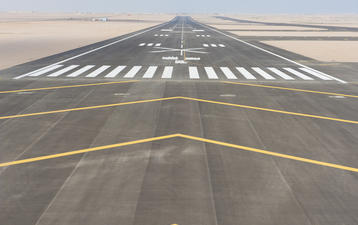
The International Civil Aviation Organization (ICAO) Annex 14 to the 1944 Chicago Convention contains the Standards and Recommended Practices (SARPs) that prescribe the physical and operational characteristics to be provided for at aerodromes.
ICAO Annex 14 is the basis of the European adoption published by EASA as well as most national regulations including CAP 168 in the United Kingdom, Part 139 Manual of Standards in Australia, CARs Part IX in the UAE, TP 312 in Canada and Manual of Aerodrome Standards in Singapore.
This 4-day course enables the participants to interpret and implement the ICAO Annex 14 specifications – or the national implementation thereof – related to Runways, Taxiways, Aprons and adjacent areas.
The course content is based on the international ICAO requirements – but is also customised to its audience, location and applicable regulatory framework, notably to highlight the major differences between international regulations and their national implementation.
Based on best practices, the participants will become knowledgeable about the configuration, dimensioning and design of these fundamental infrastructural elements and will learn how to fulfil planning and design requirements. Furthermore, special attention is set on the theoretical and practical background of the above-mentioned regulations, and on the implementation of possible mitigation measures in case of non-compliance with the requirements.
This course targets all staff involved in aerodrome design, operations and compliance. This includes airport planners and engineers, aerodrome compliance managers, auditors, accountable managers, military airfields officers, and of course Civil Aviation Authorities and regulatory oversight personnel.
Please note: This course can be booked as an in-house version in German or English - however, the course material is only available in English.
 Training 5 or more people? Ask for an In-house course at your premises or online!
Course Details
Location:In-houseLanguage:German / English
Duration:4 days
Provider:airsight GmbH
Course Content
Fundamentals and General Planning Principles
- Overview of international (ICAO) and national (based on course location, see list below) regulations for airport planning and design
- Governing legally binding principles
- Overview of additional guidance material (e.g. ICAO manuals, IATA/ACI guidance material)
- Relevant aircraft geometrical and performance-related parameters
- Definition of the most critical aircraft
Runway Planning and Design
- Dimensioning, configuration and design of runways
- Identification of the objectives and constraints depending on the airport critical aircraft (e.g. for the determination of take-off- and landing distances)
- Visual aids including markings (e.g. threshold, centre line, and touchdown zone) and lights (e.g. centre line lights and approach lighting systems)
- Runway shoulders and strips
- Runway holding positions
- Obstacle limitation requirements
Taxiway and Apron Planning and Design
- Dimensioning, configuration and design of manoeuvring areas and aprons
- Identification of the objectives and constraints depending on the aircraft mix
- Taxiways, aircraft stand taxilanes, rapid exit taxiways, holding bays and bypasses
- Taxiway shoulders and strips
- Taxi guidance components (e.g. intermediate holding positions and stop bars)
- Visual aids including marking, lighting and signage
- Design of aircraft stands
- Design of aerodrome service roads
Note: Based on the course audience and location, the course content may incorporate elements and differences of the following national regulations:
- Civil Aviation Authority of Singapore (CAAS): Manual of Aerodrome Standards
- Australia Civil Aviation Safety Authority (CASA): Civil Aviation Safety Regulations (CASR) Part 139 - Aerodromes
- Civil Aviation Authority (CAA) of New Zealand: Civil Aviation Rules Part 139 - Aerodromes
- United Arab Emirates (UAE) General Civil Aviation Authority (GCAA): Civil Aviation Regulations (CARs) Part IX - Aerodrome
- Transport Canada: Aerodromes Standards and Recommended Practices (TP 312)
Trainer
Dirk Anders
Dirk is an experienced airport planner, providing on behalf of airsight since more than 10 years his expertise in the field of runway, taxiway and apron planning and design to international clients. He is notably a renowned expert in the field of gate design and aircraft stand layout optimisation and a proficient user of CAD-based applications (AutoCAD / MicroStation / Aviplan).
Dirk is very knowledgeable in the international aerodrome regulations (ICAO/EASA), their national implementation, as well as industry’s best-practices. He gathered extensive experience in more than 100 projects for clients including Dubai, Brussels or Auckland Airports – as well as most airports in Germany.
More recently, he provided his support during several weeks on-site to Hannover Airport to assess the compliance of the airside infrastructure with EASA aerodrome regulations.
Another field of Dirk's expertise is aerodrome safeguarding and the management of obstacles, as well as flight procedure design according to PANS-OPS.
Target Group
- Airport operations managers
- Airport engineers and planners
- CAA aerodrome inspectors
- Aerodrome auditors
- Architects and civil engineers
Organisational Details
airsight offers this training course on request, worldwide. At the end of the course, all participants will receive an airsight certificate based on EASA training regulations, which is highly recognised throughout the aviation industry.
About airsight Training

airsight Training course quality
airsight operates an ISO 9001 certified Quality Management System and pursues the objective to provide high quality services that fully meet the clients’ needs.