Aviation Sustainability for Airports in APAC

Airports in the APAC region are growing fast – and are under mounting pressure to cut emissions, comply with tightening regulations, deliver on ESG expectations, and contribute to the UN Sustainable Development Goals (SDGs). This three‑day course equips airport and aviation professionals with the knowledge and tools to turn sustainability ambitions into concrete, implementable action on the ground.
Participants gain a clear overview of key global and regional regulatory frameworks (including ICAO, CORSIA and selected APAC requirements), as well as the Airport Carbon Accreditation framework and its levels. They learn what these requirements mean in practice for airport strategy, planning and operations, and how to design realistic roadmaps that align with ESG policies and relevant SDG targets.
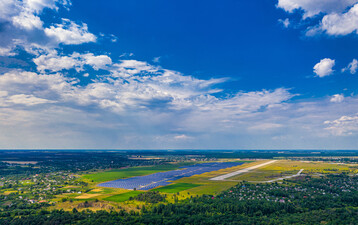
Building on airsight’s international project experience, the course highlights best practices and lessons learned from real‑world airport projects – from quick‑win measures to long‑term transformation programmes. We cover practical implementation options to reduce greenhouse gas emissions across energy, infrastructure and operations, including the deployment of renewable energies (such as solar PV on airside and landside assets), the electrification of ground operations, and the integration of low‑carbon technologies into airport development and master planning.
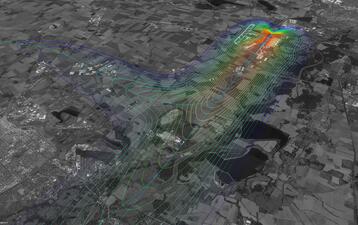
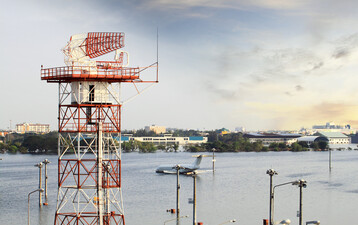
Local environmental impacts such as aircraft noise and air quality are addressed alongside climate topics, showing how airports can combine mitigation measures, monitoring systems and stakeholder engagement to manage community expectations and regulatory requirements more effectively. A dedicated module on climate resilience explores how climate risks such as heat, heavy rainfall and sea‑level rise affect airports in APAC, and how smart planning, robust infrastructure and adaptive operational concepts can strengthen resilience.
The course is designed for professionals and managers from airports, airlines and air navigation service providers, as well as representatives from aviation, planning and environmental authorities, investors and consultants involved in airport development and sustainability. Through case studies, group exercises and hands‑on examples, participants leave with concrete ideas, priority measures and roadmap elements that they can directly apply at their home airports.
 Training 5 or more people? Ask for an In-house course at your premises or online!
Course Details
Location:SingaporeLanguage:English
Date:27.10. - 29.10.2026
Duration:3 days
Provider:airsight Singapore Pte. Ltd.
Course Fee
This course is run by airsight Singapore Pte. Ltd. Terms & Conditions of airsight Singapore Pte. Ltd. apply.
Participants from companies outside of Singapore will be charged 0% VAT. Singapore Residents will be charged 9% VAT (GST). For further information please visit: About Taxes.
The final price will be shown on your invoice.
Please note: If you want to register several particpants from your company but need a single invoice for each, please register each of them seperately.
Course Content
Aviation’s Environmental Impact & Regulations
- Global/Local Impacts: Aviation CO2/Non-CO2 climate effects; airport noise, local air quality, health impacts.
- Air Traffic Trends: Status-quo/future developments; environmental footprint relevance.
- Regulatory Frameworks: International Level (ICAO); ICAO Annex 16 certification & CORSIA, ACI Airport Carbon Accreditation (ACA); ICAO Balanced Approach.
- Noise/Emission Sources: Aircraft noise and technical fundamentals; airport ground sources, environmental impact of airports
Mitigation Measures & Assessment Methods
- Environmental Impact Mitigation Measures: Flight procedures; sustainable airport ground concepts incl. Sustainable Taxiing and eGSE, airport electrification, passive noise protection, waste and water Management
- Airport Noise Management: Charges/benchmarking; advanced strategies and policy making.
- Modelling & Assessment: Aircraft performance/noise/emissions modelling (ECAC Doc 29, AEDT); noise mapping, environmental impact assessment
Future Concepts, Technologies & Resilience
- Decarbonisation Measures: SAF, hydrogen/electric aircraft and equipment; renewable energy (e.g. solar PV) at airports.
- Urban and Regional Air Mobility: Concepts and environmental impact
- Climate Resilience: APAC climate impacts; adaptation measures, resilience assessment.
- Roadmaps & Policy: ESG/SDG alignment; stakeholder engagement, airsight lessons learned.
Trainer
Christoph Struempfel-Seifert, M.Sc.
Head of airsight’s Sustainable Aviation department
Mr Struempfel-Seifert is an expert for sustainable aviation and is responsible for all project tasks related to sustainable aviation and environmental protection at airports. Furthermore, he is an appreciated trainer, sharing his knowledge and practical experience with other national and international aviation experts.
After graduating as Master of Science in Aeronautics and Astronautics from the Technical University of Berlin, he worked as a research assistant and lecturer at the Chair of Flight Guidance and Air Transport at the TU Berlin. In his scientific career, he focused on modelling aircraft noise and emissions, UAS noise measurements and calculation as well as the optimization of flight procedures with respect to environmental and eco-efficiency targets.
For airsight, he has conducted several environmental assessments, noise and emissions studies for various airports in Germany, Luxembourg, United Arab Emirates, Romania and the Philippines. As a recognized SME for aircraft noise modeling, he has extensive experience with the FAA's Aviation Environmental Design Tool (AEDT).
A second major focus of his work is to support international airports on their decarbonization journey with detailed studies on renewable energy, in particular the implementation of solar energy systems, including Singapore-Changi, Berlin, Cologne, Düsseldorf, Stuttgart and various other airports. His team is helping airports meet the challenges of the future through new, sustainable technologies, such as sustainable aircraft taxiing and e-GSE implementation.
Target Group
- Civil Aviation Authorities
- Transports and Environmental Authorities
- Airport Operators
- Air Navigation Service Providers
- Airlines
- Environment technical experts
- Municipalities and administrations
- Land-use planners
- Lawyers and legal professionals
Course Location
Participants are responsible for making their own travel arrangements. The accommodation and travel costs are at the charge of the participants. Please note that airsight does not perform any travel and hotel bookings for the participants.
The course fee includes the registration, training material and examination. Coffee breaks and business lunch are also included.
Organisational Details
The course hours are scheduled as follows:
09:00 am - 5:00 pm (SGT)
At the end of the course, all participants will receive an airsight certificate based on ICAO/EASA training regulations, which is highly recognised throughout the aviation industry.
About airsight Training

airsight Training course quality
airsight operates an ISO 9001 certified Quality Management System and pursues the objective to provide high quality services that fully meet the clients’ needs.
Course Details
Location:In-houseLanguage:English
Duration:3 days
Provider:airsight Singapore Pte. Ltd.
Course Content
Aviation’s Environmental Impact & Regulations
- Global/Local Impacts: Aviation CO2/Non-CO2 climate effects; airport noise, local air quality, health impacts.
- Air Traffic Trends: Status-quo/future developments; environmental footprint relevance.
- Regulatory Frameworks: International Level (ICAO); ICAO Annex 16 certification & CORSIA, ACI Airport Carbon Accreditation (ACA); ICAO Balanced Approach.
- Noise/Emission Sources: Aircraft noise and technical fundamentals; airport ground sources, environmental impact of airports
Mitigation Measures & Assessment Methods
- Environmental Impact Mitigation Measures: Flight procedures; sustainable airport ground concepts incl. Sustainable Taxiing and eGSE, airport electrification, passive noise protection, waste and water Management
- Airport Noise Management: Charges/benchmarking; advanced strategies and policy making.
- Modelling & Assessment: Aircraft performance/noise/emissions modelling (ECAC Doc 29, AEDT); noise mapping, environmental impact assessment
Future Concepts, Technologies & Resilience
- Decarbonisation Measures: SAF, hydrogen/electric aircraft and equipment; renewable energy (e.g. solar PV) at airports.
- Urban and Regional Air Mobility: Concepts and environmental impact
- Climate Resilience: APAC climate impacts; adaptation measures, resilience assessment.
- Roadmaps & Policy: ESG/SDG alignment; stakeholder engagement, airsight lessons learned.
Trainer
Christoph Struempfel-Seifert, M.Sc.
Head of airsight’s Sustainable Aviation department
Mr Struempfel-Seifert is an expert for sustainable aviation and is responsible for all project tasks related to sustainable aviation and environmental protection at airports. Furthermore, he is an appreciated trainer, sharing his knowledge and practical experience with other national and international aviation experts.
After graduating as Master of Science in Aeronautics and Astronautics from the Technical University of Berlin, he worked as a research assistant and lecturer at the Chair of Flight Guidance and Air Transport at the TU Berlin. In his scientific career, he focused on modelling aircraft noise and emissions, UAS noise measurements and calculation as well as the optimization of flight procedures with respect to environmental and eco-efficiency targets.
For airsight, he has conducted several environmental assessments, noise and emissions studies for various airports in Germany, Luxembourg, United Arab Emirates, Romania and the Philippines. As a recognized SME for aircraft noise modeling, he has extensive experience with the FAA's Aviation Environmental Design Tool (AEDT).
A second major focus of his work is to support international airports on their decarbonization journey with detailed studies on renewable energy, in particular the implementation of solar energy systems, including Singapore-Changi, Berlin, Cologne, Düsseldorf, Stuttgart and various other airports. His team is helping airports meet the challenges of the future through new, sustainable technologies, such as sustainable aircraft taxiing and e-GSE implementation.
Target Group
- Civil Aviation Authorities
- Transports and Environmental Authorities
- Airport Operators
- Air Navigation Service Providers
- Airlines
- Environment technical experts
- Municipalities and administrations
- Land-use planners
- Lawyers and legal professionals
Organisational Details
airsight offers this training course on request, worldwide. At the end of the course, all participants will receive an airsight certificate based on EASA training regulations, which is highly recognised throughout the aviation industry.
About airsight Training
airsight Training course quality
airsight operates an ISO 9001 certified Quality Management System and pursues the objective to provide high quality services that fully meet the clients’ needs.