Wind Energy Meets Aviation: Turning Complex Safeguarding Requirements into Viable Projects

As airports and regions accelerate their sustainability ambitions, wind farms are moving closer to aviation environments. Wind energy is essential to the transition to renewables, but proximity to an airport introduces requirements that go well beyond planning permission. The decisive question is not only whether a turbine can be built, but whether it can be safely integrated alongside aircraft operations, navigation systems and future airport development.
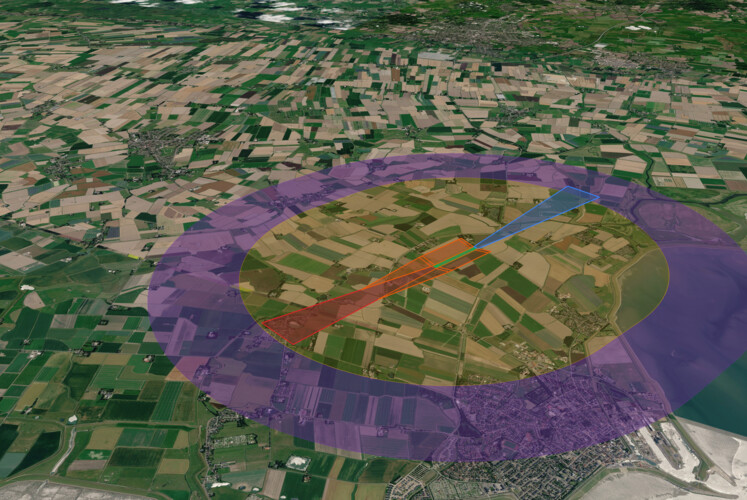
A robust aeronautical assessment provides clarity early in the project. It starts with a review of Obstacle Limitation Surfaces and Obstacle Free Surfaces (OLS/OFS), which safeguard the airspace around runways and maintain clearance for arriving and departing aircraft. Flight procedure analysis then determines whether turbines could affect obstacle clearance, departure climb gradients, approach minima or visual flight operations. Distance alone is not decisive: even wind farms many kilometres from an airport can influence its operational environment.
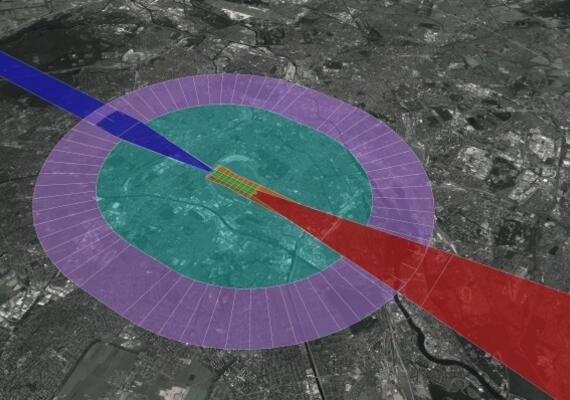
Communication, Navigation and Surveillance (CNS) systems are another critical part of the assessment. Aircraft and air traffic services depend on sensitive infrastructure such as ILS, VOR, DME, radar and communication facilities. Because large rotating blades can cause reflections, shadowing or electromagnetic interference, their potential impact on system performance must be understood before approval.
In Germany, Aircraft Detection Lighting Systems (ADLS) add a further dimension. By activating obstacle lights only when aircraft are detected nearby, ADLS can significantly reduce night-time light emissions while maintaining aviation safety. Its approval, however, requires a dedicated aeronautical assessment covering nearby airports, flight routes, helicopter operations and surrounding airspace structures.
The greatest value comes from bringing these aeronautical aspects together. Integrated obstacle safeguarding, flight procedure, CNS and, where relevant, ADLS assessments reveal potential conflicts early, when layouts can still be refined and effective mitigations developed. This gives airports and developers a reliable basis for decisions and helps wind energy projects progress without compromising aviation safety, capacity or operational resilience. As demand for both renewable energy and airport growth increases, proactive safeguarding is what turns competing requirements into compatible development.
About airsight
For more than two decades, airsight has helped airports, authorities, ANSPs and infrastructure developers worldwide turn complex safeguarding requirements into practical, project-ready solutions. Our combined expertise in obstacle assessment, flight procedure design, CNS safeguarding and aeronautical studies enables clients to integrate new developments safely, efficiently and with confidence.
Planning a wind energy project near an airport or aviation facility?
Get in touch with our team to explore how an aeronautical safeguarding assessment can provide early clarity, support informed decisions and help keep your project on track.
Key Facts